
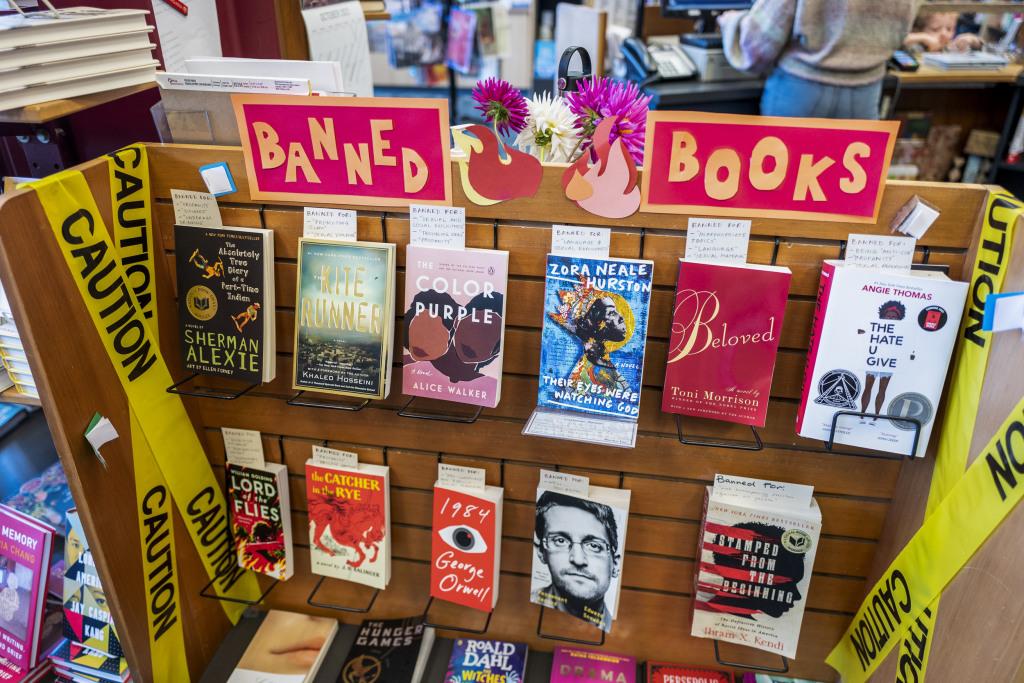
Book censorship in U.S. schools has surged to unprecedented levels, prompting alarm from free speech advocates who warn that the practice has become both “rampant and common.” Across the nation, educators and librarians are encountering increasing pressure to remove or restrict access to a wide range of books, often centered on topics of race, gender, sexuality, and history. Critics argue that these efforts not only undermine intellectual freedom but also threaten students’ right to diverse perspectives and open dialogue. As the debate intensifies, communities nationwide are grappling with the balance between protecting children and upholding constitutional principles of free expression.
Book Removal Practices Escalate Across School Districts Raising Alarm Among Advocates
Across multiple states, school districts have intensified efforts to remove books from their libraries and curricula, citing concerns over content deemed “inappropriate” or “controversial.” This surge in book removals has prompted widespread worry among educators, authors, and free speech advocates, who argue that such actions stifle intellectual freedom and limit students’ exposure to diverse perspectives. Key targets include materials addressing race, gender identity, and LGBTQ+ themes, which critics claim are being unfairly labeled as harmful or divisive.
Advocacy groups have documented a dramatic rise in censorship attempts, highlighting that many removed titles are critically acclaimed literature and important educational resources. According to recent data, these practices often rely on vague guidelines and subjective interpretations, rather than clear criteria:
- Lack of transparency: Decisions frequently occur without community input or open dialogue.
- Inconsistent criteria: What qualifies as “objectionable” varies widely between districts.
- Impact on students: Restricted access to diverse viewpoints may affect critical thinking and inclusivity.
| District | Books Removed | Reasons Cited |
|---|---|---|
| Springfield, IL | 15+ | “Inappropriate language,” “controversial themes” |
| Lakeland, FL | 10 | Parental complaints, “sexually explicit content” |
| Maplewood, MN | 8 | “Divisive ideology,” “unbalanced viewpoints” |
Impact on Educational Freedom and Student Access to Diverse Perspectives
Recent waves of book bans in schools across the United States have substantially narrowed the spectrum of viewpoints available to students, potentially hindering their critical thinking skills and cultural understanding. When educators are restricted from sharing literature that presents diverse narratives—ranging from racial and ethnic experiences to varied ideological perspectives—students face a homogenized curriculum that fails to prepare them for a pluralistic society. Advocates emphasize that this censorship threatens the core principle of educational freedom, impeding learners’ ability to engage with complex social issues or develop empathy through exposure to multiple realities.
Moreover, the exclusion of materials deemed controversial often disproportionately affects works by and about marginalized communities, raising significant concerns about equity and representation. The limitations on access have led to an atmosphere where students might miss out on:
- Historical accounts that include minority voices
- Books that foster discussions on gender identity and sexuality
- Literature challenging dominant cultural norms
Such restrictions not only curtail free expression but also reduce students’ preparedness for civic participation in a diverse democracy. As evidence suggests, schools serve as critical venues for encountering varied perspectives, making the censorship issue a pivotal concern in the ongoing debate over educational priorities in the U.S.
Legal Challenges and Policy Responses Addressing Censorship in Public Schools
Across the United States, the legal landscape around book censorship in public schools is evolving amidst growing tensions between free speech advocates and administrative bodies. Courts have increasingly become battlegrounds where decisions about banned materials are contested, highlighting a complex interplay between constitutional rights and community standards. Recent rulings emphasize the protection of students’ First Amendment rights, yet many school districts continue to enact policies that critics argue are overly restrictive and vague. Legal challenges often center on whether such bans amount to unconstitutional suppression of ideas or legitimate measures to shield children from inappropriate content.
In response, several states have introduced legislative measures designed to balance parental concerns with educators’ freedom to teach diverse perspectives. These initiatives frequently include:
- Clear guidelines on the criteria for removing books, ensuring transparency in decision-making
- Review committees with diverse representation to evaluate contested materials
- Appeal processes for students, parents, or educators who challenge censorship decisions
| State | Legislation Passed | Impact on Censorship |
|---|---|---|
| California | Book Transparency Act | Reduced arbitrary bans |
| Texas | Parental Rights Expansion | Increased challenges |
| New York | Inclusive Education Mandate | Protected diverse books |
Recommendations for Protecting Intellectual Freedom and Supporting Inclusive Curricula
To uphold the principles of intellectual freedom in schools, it is vital to implement clear policies that resist blanket bans on books and encourage diverse perspectives within curricula. School boards and administrators should promote transparency by openly discussing challenges to books and involving educators, parents, and students in decision-making processes. Establishing committees with broad community representation can help ensure that removals or restrictions on reading materials are fair, justified, and uphold free speech rights without succumbing to political pressures.
Supporting inclusive curricula requires proactive efforts to expand educational content rather than restrict it. Schools can:
- Curate reading lists that reflect multicultural voices and historically marginalized groups
- Provide training for educators on inclusive teaching strategies and handling controversial topics sensitively
- Encourage dialogue-based classroom environments where students critically engage with a variety of viewpoints
- Use audits and feedback surveys to continually assess how well the curriculum represents diverse experiences
| Strategy | Key Outcome |
|---|---|
| Community Book Review Panels | Balanced decisions reflecting stakeholder interests |
| Diversity-Focused Curriculum Development | Broader representation of voices and histories |
| Teacher Training Programs | Improved handling of challenging materials |
| Student-Centered Discussions | Enhanced critical thinking and empathy |
In Retrospect
As debates over educational content intensify nationwide, the issue of book censorship in U.S. schools remains a flashpoint for free speech advocates and educators alike. With removal efforts becoming increasingly widespread, stakeholders warn that the practice threatens not only intellectual freedom but also the diversity of perspectives essential to a comprehensive education. As this contentious trend continues to evolve, the balance between community standards and open access to information will likely remain at the forefront of discussions surrounding American public schooling.