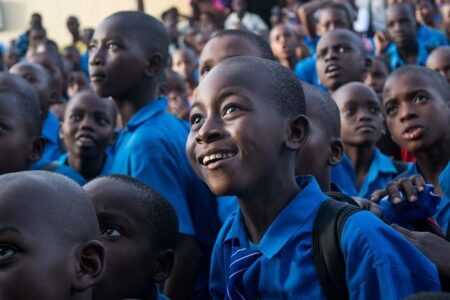
In the wake of crises that disrupt communities and dismantle educational systems, ensuring continued access to learning becomes a critical challenge. UNICEF USA’s School-in-a-Box kit emerges as a vital tool in supporting education in emergencies, providing displaced children with the essential supplies they need to resume their studies swiftly. This innovative initiative not only fosters a sense of normalcy and hope amid turmoil but also underscores the global commitment to safeguarding the right to education for every child, even in the most difficult circumstances.
Supporting Education in Emergencies Challenges and Solutions Delivered by UNICEF’s School-in-a-Box
In crisis zones worldwide, education faces monumental challenges ranging from disrupted infrastructures to a lack of teaching materials. Children fleeing conflicts or natural disasters often lose access to safe learning environments, impacting their development and emotional well-being. UNICEF’s response, the School-in-a-Box kit, addresses these obstacles by providing essential educational supplies designed for rapid deployment in emergencies. Each kit includes items such as exercise books, pencils, chalkboards, and teaching aids tailored to enable immediate classroom setups, ensuring learning continuity under dire circumstances.
Key challenges and solutions provided by the School-in-a-Box include:
- Rapidly establishing classroom settings in temporary shelters or makeshift spaces
- Equipping teachers with practical tools to adapt curricula for displaced children
- Supporting psychosocial recovery through structured educational activities
- Ensuring inclusivity by providing materials suitable for diverse linguistic and cultural groups
| Challenge | UNICEF’s Solution | Impact |
|---|---|---|
| Damaged or unavailable school buildings | Portable teaching and learning kits | Immediate resumption of education |
| Shortage of qualified teachers | Training modules included in kits | Empowered local educators |
| Displacement disrupting learning routines | Flexible and adaptable educational content | Consistent learning continuity |
Essential Components of the School-in-a-Box Kit Ensuring Continuity of Learning
At the core of UNICEF’s innovative solution to education disruption, the School-in-a-Box kit is a carefully curated collection of materials designed to transform any temporary learning space into a fully functioning classroom. Each kit contains essential supplies such as chalkboards, exercise books, and pencils, alongside vital teaching aids like illustrated storybooks and basic educational games that engage children creatively. These components aim to provide not only the physical tools necessary for lessons but also foster an environment conducive to effective learning, no matter the circumstances.
Beyond the tangible materials, the School-in-a-Box kit includes crucial resources for educators, such as a teacher’s guide and lesson plans tailored to a variety of emergency contexts. This empowers instructors to deliver quality education efficiently, even without access to a traditional classroom. The combination of student materials and teacher support ensures uninterrupted learning and offers a structured approach during crises, reinforcing UNICEF’s commitment to safeguarding the right to education worldwide.
Impact Stories from the Field Demonstrating the Kit’s Role in Crisis Situations
In regions devastated by conflict and natural disasters, the UNICEF School-in-a-Box kit has empowered thousands of children to reclaim a sense of normalcy through education. In Syria, for example, displaced families living in makeshift camps report that the kit’s readily available learning materials have transformed bleak tents into vibrant classrooms. Teachers, many of whom had never worked in such conditions before, rely heavily on the kit’s comprehensive manuals and supplies to deliver structured lessons amid chaos. This quick establishment of educational spaces has played a pivotal role not only in continuing children’s learning but also in providing psychological stability during uncertain times.
- South Sudan: The kit facilitated learning after floods displaced entire communities, enabling rapid setup of temporary schools.
- Bangladesh: Rohingya refugee camps integrated the kits to educate traumatised children, fostering critical social connections.
- Yemen: Despite ongoing conflict, the kit has helped maintain the educational continuum in remote areas with minimal access.
Beyond simple access to materials, impact assessments reveal substantial advantages in tracking student progress and community engagement. A recent survey in Uganda highlighted how the kit’s organized approach allowed teachers to adapt content easily, catering to diverse age groups under one roof. The following table summarizes key outcomes documented in three crisis settings, underscoring the kit’s role not just as an educational tool but as a beacon of hope and resilience.
| Location | Children Reached | School Setup Time | Community Feedback |
|---|---|---|---|
| Lebanon | 4,500+ | 3 Days | Highly Positive |
| Democratic Republic of Congo | 7,200+ | 5 Days | Encouraging |
| Philippines | 3,000+ | 2 Days | Strong Support |
Recommendations for Policy Makers and Humanitarian Agencies to Strengthen Educational Response
Policy makers must prioritize the integration of flexible educational frameworks that can be rapidly deployed in emergency settings. This includes endorsing and funding innovative tools like UNICEF’s School-in-a-Box, which ensures continuity of education despite disruptions. Strengthening partnerships between governments, local communities, and international organizations can accelerate the scaling of these solutions. Additionally, embedding education in broader humanitarian strategies—and ensuring it is treated as a fundamental right during crises—will enhance resilience and promote long-term recovery.
Humanitarian agencies should enhance coordination mechanisms to deliver educational resources more efficiently and adapt programs to cultural and contextual needs. Key actions include:
- Training local teachers to improve capacity building on the ground.
- Implementing psychosocial support alongside academic curricula to address trauma.
- Ensuring gender equity so all children, including girls, access safe learning environments.
- Utilizing data-driven assessments to monitor educational impact and gaps in real time.
Future Outlook
As crises continue to disrupt the education of millions of children worldwide, UNICEF’s School-in-a-Box kit remains a vital tool in restoring learning opportunities quickly and effectively. By providing essential materials and resources in emergency settings, this innovative initiative ensures that education can resume even in the most challenging circumstances. As humanitarian needs grow, sustained support for programs like School-in-a-Box is critical to safeguarding the rights of vulnerable children and building a foundation for their future. UNICEF USA’s ongoing commitment highlights the importance of collective action to protect education as a beacon of hope amid adversity.