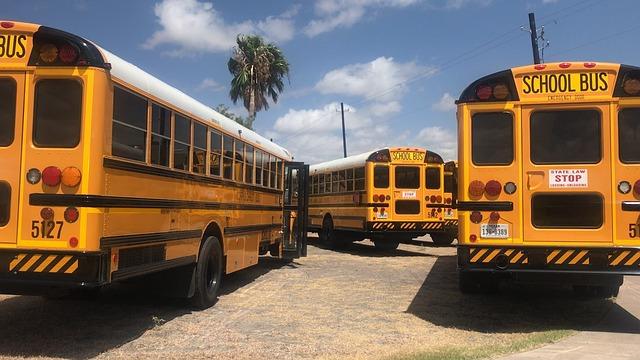
Public schools in the United States play a critical role in shaping the nation’s future, yet the question of how these institutions are funded remains a complex and often misunderstood issue. Funding for public education in the U.S. is derived from a mix of local, state, and federal sources, each contributing different proportions and facing unique challenges. Understanding the intricate financial framework behind public schools is essential for grasping the broader landscape of educational equity and policy. This article, informed by data from USAFacts, breaks down the various funding streams that sustain America’s public schools and explores their impact on the quality and accessibility of education nationwide.
Overview of Public School Funding Sources in the United States
Public education in the United States relies on a complex mix of funding sources, each playing a crucial role in sustaining the quality and availability of schooling across diverse communities. The majority of financial support comes from state governments, which allocate funds primarily through income and sales taxes. Next in line are local contributions, chiefly sourced from property taxes, creating a direct connection between community wealth and school budgets. Finally, the federal government supplements state and local funding with grants targeting specific programs such as special education, Title I for low-income students, and school nutrition services.
The distribution of these funding streams can be summarized as follows:
- State funding: Approximately 47% of total public school revenue, varying widely by state.
- Local funding: Roughly 45%, heavily dependent on property values within school districts.
- Federal funding: Around 8%, mostly earmarked for targeted initiatives rather than general operation costs.
| Funding Source | Primary Mechanism | Approximate Share |
|---|---|---|
| State Governments | Income & Sales Taxes | 47% |
| Local Governments | Property Taxes | 45% |
| Federal Government | Grants & Programs | 8% |
The Impact of Local Property Taxes on School Budgets
Public schools heavily depend on local property taxes as a significant source of their funding, creating a landscape where educational resources can vary widely from one community to another. Typically, areas with higher property values generate more revenue, allowing schools to offer enhanced programs, better facilities, and competitive teacher salaries. Conversely, districts in regions with lower property values often struggle to meet basic operational costs, which can impact everything from class sizes to extracurricular opportunities.
This reliance on property taxes contributes to disparities in educational quality, making funding inequity a critical issue nationwide. The system benefits from stable revenue streams but faces criticism for reinforcing socioeconomic divisions. Key components influenced by local property taxes include:
- Teacher compensation and professional development opportunities
- Infrastructure maintenance and capital improvements
- Access to technology and learning materials
- Funding for extracurricular and special programs
| District Type | Average Property Tax Rate (%) | Funding Per Student ($) |
|---|---|---|
| Affluent Suburban | 1.25 | 14,800 |
| Rural Low-Income | 0.85 | 8,300 |
| Urban Mixed Income | 1.05 | 12,200 |
Challenges and Inequities in State Funding Formulas
State funding formulas are intended to allocate education dollars fairly, but in reality, many contain inherent flaws that perpetuate disparities. These formulas typically rely on property tax revenues, which vary widely between wealthy and low-income districts. As a result, schools in affluent areas often receive more funding per student compared to those in economically disadvantaged communities. This gap is further widened by formulas that do not fully account for the additional resources necessary to support students facing challenges such as disabilities, language barriers, or poverty.
Moreover, the complexity and opacity of some state formulas make it difficult for policymakers and the public to assess or correct inequities effectively. Below is a simplified overview of common factors influencing disparities in state funding:
- Property Tax Dependence: Creates uneven revenue bases.
- Weighting Systems: Varying criteria for student needs and district costs.
- Capital Funding: Often excluded or handled separately, leading to infrastructure gaps.
- Periodic Revisions: Lack of regular updates can freeze inequities in place.
| Factor | Impact on Equity | Example |
|---|---|---|
| Property Taxes | Creates funding variance | Wealthy districts raise 30%+ more |
| Student Weighting | Adjusts for special needs | Varies from state to state |
| Capital Funds | Infrastructure inequality | Older districts lag in upgrades |
Strategies for Enhancing Financial Transparency and Accountability in Schools
To build trust and foster community engagement, schools must implement robust mechanisms that make financial data accessible and understandable to all stakeholders. Regularly publishing detailed budget reports online, hosting open forums for parent and staff input, and employing interactive dashboards can demystify complex financial processes. These tools not only empower communities to track spending but also encourage collaborative oversight, reducing risks of mismanagement or fraud.
Key approaches include:
- Routine audits conducted by independent agencies to ensure compliance and accuracy.
- Clear categorization of expenditures so stakeholders can pinpoint funding allocations.
- Training programs for school administrators on ethical financial management.
- Active use of technology platforms designed for real-time financial monitoring and reporting.
| Transparency Strategy | Primary Benefit |
|---|---|
| Interactive Financial Dashboards | Engage community with real-time data |
| Independent Audits | Ensure accountability and trust |
| Public Budget Forums | Encourage stakeholder collaboration |
Concluding Remarks
In summary, the funding of public schools in the United States is a complex interplay of local, state, and federal resources, with local property taxes serving as the primary source. This structure creates significant variations in funding levels across districts, impacting educational equity nationwide. Understanding the sources and mechanisms behind public school funding is essential for policymakers, educators, and citizens alike as they work to address disparities and ensure quality education for all students. As discussions around educational funding continue, transparency and informed dialogue will remain critical in shaping the future of America’s public schools.