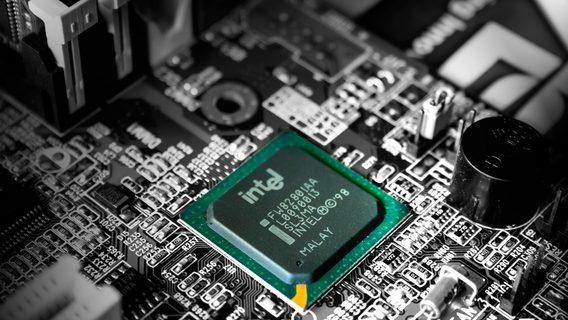
Once the crown jewel of American semiconductor manufacturing, Intel has long stood as a symbol of technological prowess and industry dominance. However, the landscape of the chipmaking world has dramatically shifted in recent years. Once the most valuable U.S. chipmaker, Intel has seen its position eclipsed by Nvidia, a company that has surged ahead with breakthroughs in graphics processing and artificial intelligence technologies. This article examines how Intel’s storied reign gave way to Nvidia’s rapid ascent, exploring the strategic missteps, market dynamics, and innovation races that reshaped the semiconductor industry’s hierarchy.
Intel’s Rise to Dominance and Its Strategic Missteps
Intel’s ascendancy in the semiconductor industry was built on decades of innovation and aggressive market positioning. Throughout the early 2000s, the company held a near-monopoly in PC processors, powering the explosion of personal computing worldwide. Intel’s ability to execute on manufacturing prowess, combined with strong alliances and investment in research and development, established it as the unrivaled leader. At its peak, Intel dominated the chipset market not only through raw performance but also via strategic partnerships with OEMs, giving it unmatched market penetration.
However, the chipmaker’s dominance began to erode due to a series of strategic missteps that allowed competitors like Nvidia to leapfrog in critical areas. Key factors included:
- Delays in advancing semiconductor fabrication technology, causing Intel to fall behind rivals in chip efficiency
- Underestimating the rise of GPUs and AI accelerators, sectors where Nvidia aggressively expanded
- Missed opportunities in data center and mobile markets, as Intel focused heavily on traditional CPU designs
- Internal management hurdles, impacting innovation cadence and operational agility
These challenges culminated in a significant loss of market share and investor confidence, highlighting how even industry giants must continuously adapt to survive.
| Aspect | Intel’s Approach | Nvidia’s Strategy |
|---|---|---|
| Process Nodes | Delayed 10nm transition | Rapid adoption of advanced nodes via partners |
| Market Focus | CPU-centric, PC-heavy | GPU and AI acceleration, data centers |
| R&D Investment | $13 billion annually | $4 billion but highly focused |
| Growth Areas | Conservative expansion | Aggressive in emerging tech |
Nvidia’s Innovation and Market Expansion Driving Its Surge
Nvidia’s relentless focus on cutting-edge technology has been the cornerstone of its meteoric ascent in the semiconductor sector. The company’s strategic investments in AI and machine learning chips have positioned it at the forefront of contemporary computing power. Notably, Nvidia’s GPUs have become critical components in data centers, gaming platforms, and autonomous vehicles, driving unprecedented demand. This technological leap is not merely incremental but transformative, reshaping the very ecosystem of chip utilization and establishing new revenue streams.
Beyond innovation, Nvidia’s aggressive expansion into new markets underscores its surge. The company has adeptly penetrated sectors traditionally dominated by rivals, including cloud computing and automotive tech, leveraging partnerships with major cloud providers and automotive manufacturers. Its product diversification has also played a crucial role:
- AI accelerators: Enabling faster and more efficient AI model training
- Data center solutions: Catapulting Nvidia as a leader in handling massive workloads
- Edge computing: Pioneering new form factors for on-device intelligence
| Segment | 2024 Growth Rate | Market Share |
|---|---|---|
| Data Centers | 35% | 28% |
| Gaming | 20% | 45% |
| Automotive | 50% | 10% |
Impact of Industry Trends on Chipmaker Valuations
The rapid evolution of semiconductor technology and market dynamics has drastically reshaped the landscape of chipmaker valuations. Nvidia’s surge can largely be attributed to its strategic focus on graphics processing units (GPUs) optimized for artificial intelligence, gaming, and data center applications—sectors currently experiencing exponential growth. Meanwhile, Intel’s valuation decline reflects challenges in transitioning from its established CPU dominance to newer, more agile manufacturing processes and diversified product portfolios. This shift has made Nvidia the preferred investment for those prioritizing innovation-driven growth and future technology ecosystems.
- AI and data-centric computing: Nvidia leads with specialized architectures pushing performance boundaries.
- Manufacturing advancements: Intel struggles to match foundry innovations offered by competitors.
- Market perception: Investors favor companies demonstrating robust expansion into emerging technologies.
| Metric | Intel (2024) | Nvidia (2024) |
|---|---|---|
| Market Cap (Billion $) | 160 | 500 |
| R&D Spending (Billion $) | 15 | 6 |
| Focus Areas | CPUs, Foundry | GPUs, AI, Data Centers |
The disparity reflects divergent trajectories, where Nvidia has capitalized on emergent sectors with high growth potential, crafting an image as a futuristic powerhouse. Intel’s commitment to legacy markets, paired with production setbacks, has undermined investor confidence. However, ongoing investments in process innovation and efforts to expand foundry capabilities might recalibrate Intel’s position in the coming years. The unfolding battle between traditional chip architecture and accelerated, AI-driven platforms underscores a broader industry shift driving valuation disparities.
Recommendations for Intel’s Path to Regain Market Leadership
To reclaim its position atop the semiconductor industry, Intel must prioritize innovation with aggressive investments in next-generation chip architectures and process technology. Strategic partnerships and acquisitions in AI and GPU capabilities can foster a diversified portfolio that captures emerging markets. Furthermore, Intel’s manufacturing prowess needs revitalization through enhanced wafer fabrication facilities, ensuring competitiveness amid global supply chain challenges.
Key focus areas include:
- Accelerating R&D: Commit substantial resources to shrinking transistor sizes and exploring breakthrough materials.
- Expanding product range: Develop specialized chips to cater to AI, gaming, and data center demands.
- Strengthening ecosystem: Build robust software and hardware integration to attract developers and OEMs.
- Global manufacturing footprint: Increase production flexibility by expanding fabrication sites across multiple regions.
| Strategic Pillar | Objective | Impact |
|---|---|---|
| Advanced Lithography | Develop 3nm and below process nodes | Enhanced performance and energy efficiency |
| AI and GPU Integration | Launch competitive AI accelerators | Capture high-growth AI market share |
| Manufacturing Expansion | Build new fabs in the U.S. and Europe | Reduce supply risks and increase capacity |
Insights and Conclusions
Intel’s journey from being the most valuable U.S. chipmaker to trailing behind Nvidia underscores the rapidly evolving dynamics of the semiconductor industry. As technological demands shift and competition intensifies, Intel faces the critical challenge of redefining its strategy to reclaim its leadership position. The company’s future will depend on its ability to innovate and adapt in a market where agility and cutting-edge performance are paramount.