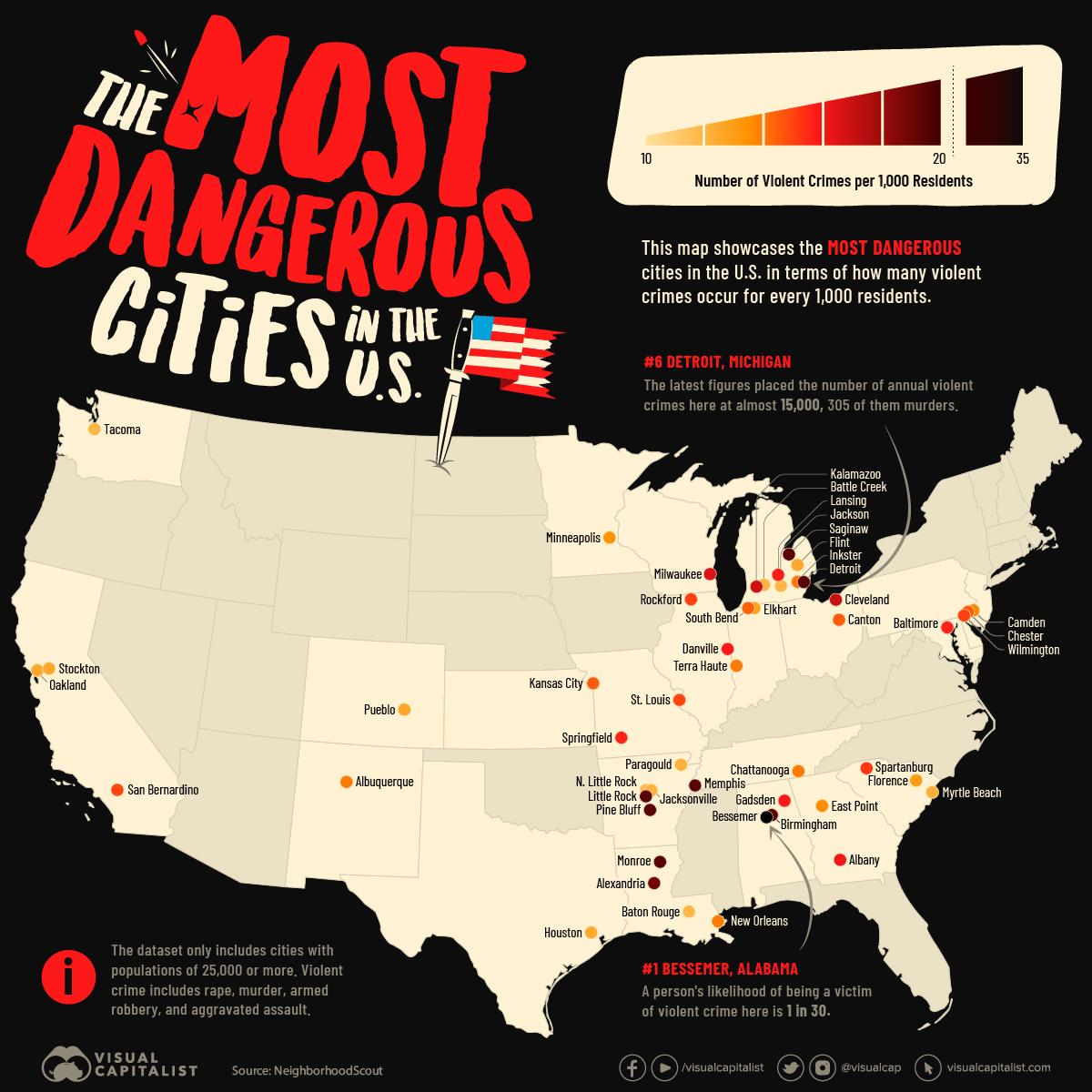
In 2023, concerns over public safety remain at the forefront across various American communities, as newly released data from Statista highlights the most dangerous cities in the United States based on violent crime rates. This comprehensive analysis sheds light on urban areas grappling with elevated incidents of violence, offering crucial insights into patterns of crime and the challenges faced by law enforcement agencies. Understanding these statistics is essential for policymakers, residents, and stakeholders aiming to address safety and improve quality of life in these high-risk environments.
Most Violent Cities in the US Revealed by 2023 Crime Data
Analysis of the latest 2023 crime data reveals a concerning spike in violent offenses across several metropolitan areas, redefining the landscape of urban safety in the United States. Cities like St. Louis, Baltimore, and Detroit have notably sustained their positions on the list of top cities grappling with violent crime, driven by a combination of socioeconomic challenges and systemic issues. Key trends indicate a significant rise in offenses such as aggravated assault, robbery, and homicide, underscoring the urgency for targeted interventions and enhanced law enforcement strategies.
Highlighting the most affected urban centers, the following factors stand out as primary contributors to these alarming rates:
- Economic Disparity: High poverty levels correlate strongly with increased violent crime rates.
- Unemployment: Cities with higher unemployment tend to experience elevated incidents of violence.
- Gang Activity: The presence of organized crime networks exacerbates local crime statistics.
- Limited Community Resources: Reduced access to education and social services hampers crime prevention efforts.
| City | Violent Crime Rate (per 100,000 inhabitants) | Homicides |
|---|---|---|
| St. Louis, MO | 1,927 | 194 |
| Baltimore, MD | 1,844 | 240 |
| Detroit, MI | 1,750 | 160 |
| Memphis, TN | 1,630 | 140 |
| Oakland, CA | 1,420 | 90 |
Examining Root Causes Behind Rising Urban Violence
Urban violence spikes are rarely attributable to a single factor; rather, they stem from a complex web of socio-economic and systemic issues. One of the primary contributors is economic disparity, which often manifests in neighborhoods with limited access to jobs, education, and social services. Such environments can foster conditions ripe for criminal activities as individuals seek alternative means of survival. Additionally, underfunded public safety programs and strained law enforcement-community relationships exacerbate tensions, reducing the effectiveness of crime prevention efforts.
Another pivotal element involves urban infrastructure challenges, including inadequate housing and transportation systems that disproportionately affect marginalized populations. Social fragmentation, fueled by historical segregation and lack of investment, limits community cohesion and informal social controls. The following highlights some root causes linked to rising violent crime rates:
- Persistent poverty and unemployment
- Limited access to quality education and youth programs
- Systemic racial and economic inequalities
- Substance abuse and mental health crises
- Gaps in community policing and public trust
| Factor | Impact |
|---|---|
| Economic disparity | Creates high-risk environments lacking opportunities |
| Social fragmentation | Reduces community cohesion, enabling violence |
| Insufficient policing resources | Limits crime deterrence and response capability |
| Mental health challenges | Increase risk factors for violent incidents |
How Communities Are Responding to Safety Challenges
In response to rising violent crime rates, numerous communities across the U.S. have initiated grassroots efforts aimed at bolstering public safety. Local leaders are increasingly prioritizing collaboration with residents, establishing neighborhood watch programs and community policing strategies that foster trust between law enforcement and citizens. These efforts emphasize proactive engagement, where officers work alongside community members to identify and address root causes of violence rather than just responding to incidents.
Additionally, cities are investing in technology and infrastructure to deter crime and improve emergency response times. Some of the most effective initiatives include:
- Installation of surveillance cameras in high-crime areas to enhance police presence and accountability
- Implementation of youth outreach programs targeting at-risk populations with mentorship and educational support
- Expansion of mental health resources within communities to address underlying social issues influencing violent behavior
| Community Initiative | Impact | Example City |
|---|---|---|
| Neighborhood Watch | Reduced local burglaries by 30% | Detroit, MI |
| Youth Outreach Programs | Drop in gang recruitment by 22% | Baltimore, MD |
| Surveillance Enhancement | Quicker crime resolution times | Memphis, TN |
Expert Strategies for Reducing Violent Crime Nationwide
Addressing the root causes behind violent crime requires a multifaceted approach that combines community engagement, policy reform, and technological advancement. Law enforcement agencies are increasingly adopting data-driven policing techniques, leveraging predictive analytics to allocate resources more efficiently and intervene before violence escalates. Moreover, community policing initiatives focus on building trust between residents and officers, which experts say is essential in fostering cooperation and reducing crime rates. Key strategies include:
- Investment in youth programs and education to mitigate the allure of gang involvement.
- Expansion of mental health services to address trauma and prevent violence stemming from untreated conditions.
- Implementation of gun control measures tailored to local needs and legal frameworks.
- Enhancement of neighborhood surveillance and public lighting to deter criminal activity.
Legislators and urban planners also emphasize the importance of economic revitalization as a foundation for long-term crime reduction. By creating job opportunities and improving neighborhood infrastructure, cities can disrupt cycles of poverty that often correlate with higher violent crime rates. Below is a snapshot of how a coordinated approach between different sectors offers a blueprint for safer urban environments:
| Sector | Approach | Expected Impact |
|---|---|---|
| Law Enforcement | Predictive Policing & Community Engagement | Proactive Crime Prevention & Improved Trust |
| Education | After-School & Mentorship Programs | Lower Youth Offending Rates |
| Healthcare | Mental Health Access Expansion | Reduction in Violence Linked to Trauma |
| Urban Development | Job Creation & Infrastructure Upgrades | Economic Stability & Crime Deterrence |
Key Takeaways
As the data from Statista’s 2023 report makes clear, violent crime remains a pressing challenge in several U.S. cities, underscoring deep-rooted social and economic issues. While some areas show signs of improvement, others continue to grapple with high rates of violence, impacting residents’ safety and quality of life. Understanding these trends is critical for policymakers, law enforcement, and communities as they work to implement effective strategies aimed at reducing crime and fostering safer environments nationwide.