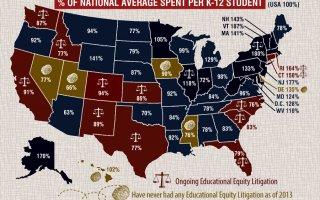
In the complex landscape of public education financing in the United States, understanding the sources of funding is crucial for policymakers, educators, and taxpayers alike. A significant question that often arises is: what percentage of public school funding actually comes from the federal government? According to data compiled by USAFacts, federal contributions play a distinct but limited role in supporting America’s public schools, complementing state and local funding efforts. This article explores the breakdown of public school funding sources, shedding light on the federal government’s share and its impact on education nationwide.
Federal Contributions to Public School Funding Explored
The federal government plays a crucial yet limited role in financing public schools across the United States. While the majority of funding originates from state and local sources, federal contributions typically account for about 8-10% of total public education funding. This funding is primarily designated to support specific programs and initiatives, such as disadvantaged student aid, special education, and school lunch programs, rather than general operational costs. These targeted investments aim to promote equity and address educational disparities nationwide.
Federal funds are distributed through various channels, including grants and formula-based programs that schools and districts can access. Key components of federal education spending include:
- Title I Grants: Providing financial assistance to schools with high numbers of low-income students.
- Individuals with Disabilities Education Act (IDEA): Funding for special education services.
- Impact Aid: Supporting schools affected by federal activities, such as military bases.
| Federal Program | Approximate Share of Funding (%) |
|---|---|
| Title I Grants | 4.5 |
| IDEA Special Education | 3.2 |
| Impact Aid | 0.8 |
| Other Programs | 1.5 |
State and Local Roles in Education Financing
State and local governments shoulder the majority of responsibility for funding public education, providing over 90% of the necessary resources across the United States. This significant financial commitment covers everything from teacher salaries and school infrastructure to educational programs and transportation. States typically allocate funds via formulas that consider factors such as student enrollment, local property wealth, and specific needs like special education. Meanwhile, local governments, primarily through property taxes, contribute a sizable portion—especially in wealthier districts—resulting in disparities in funding between communities.
Their role extends beyond financing; states also set educational standards, licensing requirements, and assessment protocols. Local school districts work closely with both levels of government to implement policies and manage daily operations. Here’s a brief outline of the typical funding sources for public schools:
- State Funds: Usually around 45-50% of total funding
- Local Funds: Roughly 40-45%, largely from property taxes
- Federal Funds: Typically less than 10%, reserved for targeted programs
| Funding Source | Average Contribution (%) |
|---|---|
| State Government | 47% |
| Local Government | 44% |
| Federal Government | 9% |
Impact of Federal Funding on Classroom Resources
Federal dollars make up a crucial, though relatively modest, share of the total public school funding in the United States—roughly 8-10%. Despite this minority share, federal funding plays an outsized role in ensuring schools, especially those serving low-income communities, have access to essential classroom resources. These funds often target specific needs such as special education, language learning programs, and technology upgrades. This targeted allocation allows schools to bridge gaps that state and local funding might not cover, thus promoting equitable learning opportunities across diverse districts.
Classroom enhancements funded by the federal government include:
- Specialized instructional materials for students with disabilities
- Technology and infrastructure upgrades like computer labs and internet connectivity
- Professional development for teachers focused on federally mandated programs
- Support services such as counseling and intervention for at-risk students
| Resource Category | Federal Share (%) | Impact Highlight |
|---|---|---|
| Special Education | 15 | Additional teachers and materials |
| Technology | 12 | Enhanced digital learning tools |
| Teacher Training | 10 | Ongoing professional development |
| Student Support Services | 9 | Improved counseling and health |
Policy Recommendations for Equitable School Funding
To address the persistent inequities in school funding across the United States, policymakers must prioritize reforms that ensure resources are allocated based on student needs rather than local wealth. Enhancing federal contributions could help level the playing field, especially in underfunded districts that rely heavily on local property taxes. Targeted funding formulas that prioritize low-income students, English language learners, and students with disabilities can make a substantial difference in closing achievement gaps and providing equal opportunities for all children.
Effective policy changes should include the following strategies:
- Increasing federal funding proportions: Current federal contributions hover around 8-10%, which is insufficient to balance disparities.
- Implementing weighted student funding models: Resources are allocated based on specific student characteristics and needs rather than a flat per-pupil amount.
- Enhancing transparency and accountability: Public reporting of funding flows ensures districts comply with equitable allocation principles.
- Promoting collaboration: Encouraging state and local partnerships to supplement federal investments in targeted programs.
| Funding Source | Approximate Percentage | Policy Focus |
|---|---|---|
| Federal Government | 8-10% | Increase equity via targeted grants |
| State Government | 45-50% | Adjust formulas toward need-based funding |
| Local Property Taxes | 40-45% | Reduce reliance and equalize revenue sources |
Concluding Remarks
In summary, while the federal government plays a crucial role in supporting public education across the United States, it accounts for a relatively modest portion of overall school funding. According to data from USAFacts, federal contributions make up roughly 8-10% of public school funding, with the majority coming from state and local sources. Understanding this distribution is essential for informed discussions about education policy and resource allocation as communities and lawmakers work to address the evolving needs of public schools nationwide.