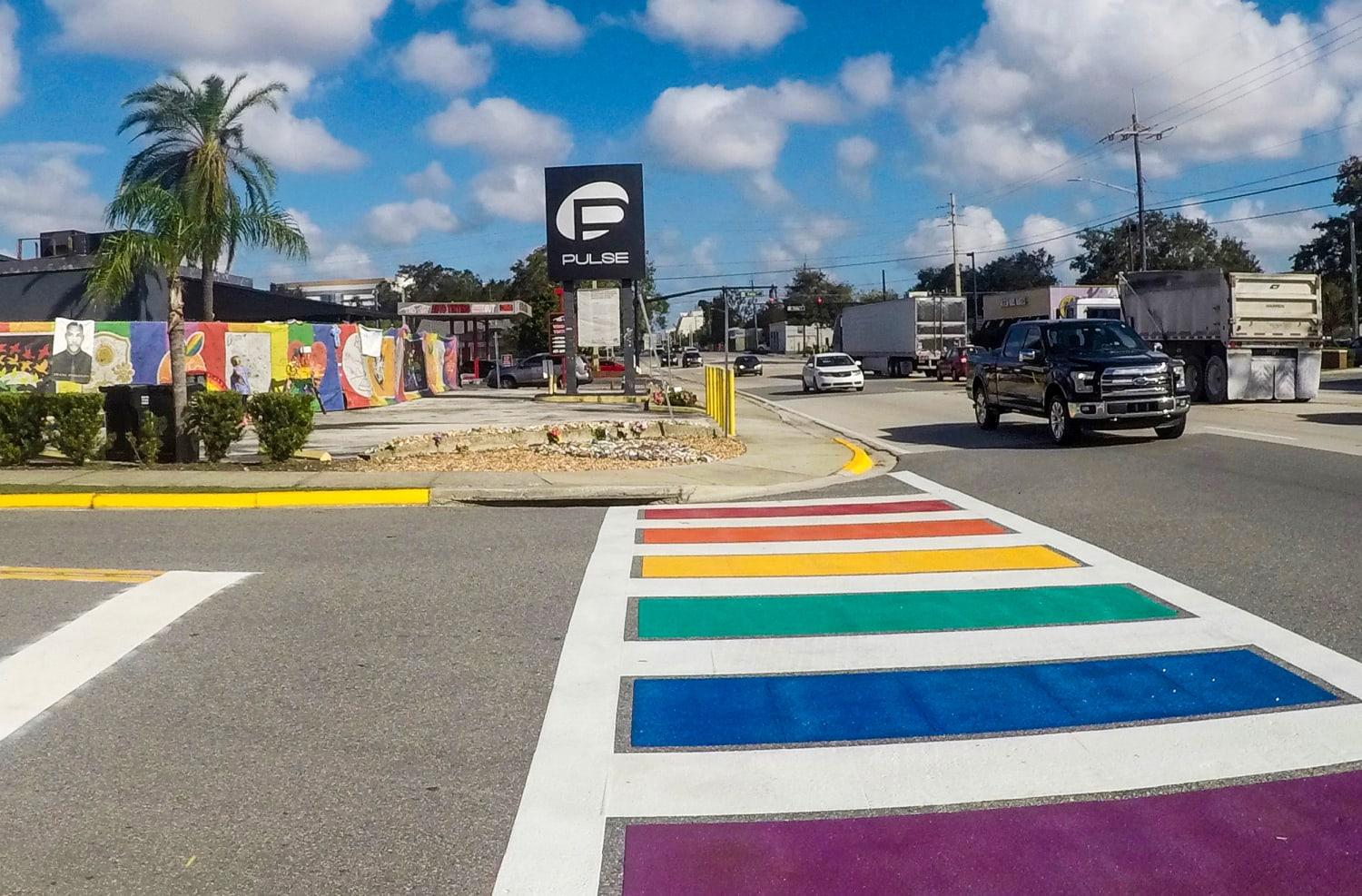
The iconic rainbow crosswalk at the Pulse nightclub memorial in Orlando, Florida, was quietly removed this week amid a broader crackdown on street art initiatives under the Trump administration. The colorful installation, which had stood as a vibrant symbol of LGBTQ+ pride and remembrance since the 2016 mass shooting, was taken down as city officials cited new regulatory measures on public art and street modifications. The removal has sparked renewed debate over the balance between urban aesthetic control and preserving sites of cultural and historical significance.
Rainbow Crosswalk Removal Sparks Debate Over LGBTQ Memorial Preservation
Authorities’ decision to remove the iconic rainbow crosswalk at the Pulse nightclub memorial has sparked widespread controversy and raised difficult questions about preserving symbols central to LGBTQ history. Advocates argue that the vibrant pedestrian artwork serves as a vital public tribute to the 49 lives lost during the 2016 mass shooting and as a beacon of resilience for the community. Conversely, city officials cited recent directives aiming to eliminate politically charged street art under the current administration’s public space policies.
Community reactions have been sharply divided, highlighting a complex debate over cultural memory versus regulatory enforcement. Key concerns voiced include:
- Erasure of LGBTQ stories: Many fear that removing such memorials diminishes the visibility of LGBTQ struggles and victories.
- Consistency in urban art policies: Critics question whether the crackdown selectively targets minority communities’ expressions.
- Preservation alternatives: Suggestions have surfaced advocating for sanctioned replacement murals or permanent monuments.
| Stakeholder | Position | Requested Action |
|---|---|---|
| LGBTQ Advocacy Groups | Preserve memorial | Official designation & restoration of mural |
| City Officials | Enforce art regulations | Remove unauthorized street art |
| Local Residents | Mixed | Community forums for decision-making |
Contextualizing Trumps Street Art Crackdown and Its Impact on Public Expression
The removal of the rainbow crosswalk at the Pulse nightclub memorial is a stark illustration of the broader implications stemming from Trump’s aggressive policies targeting street art nationwide. This action not only diminishes the visibility of public tributes but also signals an increasingly restrictive environment for artistic expression in public spaces. Activists and community members argue that such crackdowns disproportionately silence marginalized voices, particularly those commemorating LGBTQ+ lives and communities. The crackdown has sparked fierce debates around freedom of expression, public memory, and the role of government intervention in art.
- Artistic erasure: The forced removal of symbolic street art erodes community identity and historical acknowledgment.
- Legal ambiguities: Vague enforcement of anti-graffiti policies leaves artists uncertain about permissible expressions.
- Community backlash: Local groups mobilize to defend public art as an essential platform for social justice narratives.
Below is a summary table highlighting the key impacts of the street art crackdown on public expression, reflecting the tensions between governmental authority and community-led initiatives:
| Impact Area | Effect | Community Response |
|---|---|---|
| Visibility | Significant reduction of memorial art in public spaces | Protests and vigils to restore removed artwork |
| Legal Framework | Stricter enforcement of anti-graffiti laws | Calls for clearer guidelines protecting expressive art |
| Cultural Memory | Diminished physical reminders of tragedies and identities | Community initiatives to document and archive artworks digitally |
Legal and Community Responses to the Pulse Nightclub Tribute Alteration
Activists and local leaders have voiced sharp criticism following the removal of the rainbow crosswalk tribute at the Pulse nightclub memorial, citing concerns over the preservation of LGBTQ+ visibility and historical memory. The action, interpreted by many as part of a broader initiative under former President Trump’s administration to regulate street art, has sparked a legal debate over the boundaries of artistic expression on public property. Advocacy groups argue that the crosswalk not only commemorated the victims of the 2016 tragedy but also stood as a symbol of resilience and inclusivity.
Key points raised by community advocates include:
- The memorial’s importance in maintaining the cultural heritage of the LGBTQ+ community.
- The potential chilling effect on public art installations that serve social justice causes.
- Calls for municipal ordinances protecting memorial art from arbitrary removal.
Meanwhile, legal experts highlight a complex intersection of municipal regulations, free speech protections, and federal directives that govern street art and public memorials. A comparative overview reveals the nuanced enforcement landscape:
| Jurisdiction | Policy on Street Art | Impact on Memorials |
|---|---|---|
| Federal | Strict regulation focusing on unauthorized alterations | Increased removal of unapproved public artworks |
| State | Varied; some states enact protective laws | Moderate protection based on local statutes |
| Local | Often allows community-driven exceptions | Strongest support for memorial preservation |
The ongoing community dialogue emphasizes reconciling regulatory enforcement with honoring the memory of Pulse victims through public art, urging policymakers to consider both legal implications and the emotional significance held by such tributes.
Recommendations for Protecting Symbolic Art at Sensitive Memorial Sites
Preserving symbolic art at sensitive memorial sites requires a delicate balance between honoring community expression and maintaining public order. Authorities should prioritize collaborative dialogue with local stakeholders before taking any action that may impact the artwork’s integrity or meaning. Establishing formal protections—such as heritage designations or temporary preservation orders—can provide a legal framework to safeguard these cultural markers from unilateral removal during political or ideological crackdowns.
Additionally, implementing clear guidelines for public art creation and maintenance near memorials is crucial to prevent conflict without stifling creativity. Communities and officials might consider the following best practices:
- Regular consultations: Engage advocacy groups, artists, and survivors’ families to ensure art reflects collective values.
- Temporary permits: Facilitate authorized, time-limited installations that can be relocated respectfully.
- Educational signage: Inform visitors about the art’s significance to foster understanding and respect.
- Conflict resolution mechanisms: Provide channels for grievances that avoid abrupt removal.
| Recommendation | Key Benefit |
|---|---|
| Collaborative Dialogue | Builds community trust |
| Formal Protections | Legal safeguard for artwork |
| Temporary Permits | Balances expression and order |
| Educational Signage | Enhances public awareness |
Closing Remarks
The removal of the rainbow crosswalk at the Pulse nightclub memorial marks a contentious moment in the ongoing debate over public expressions of LGBTQ+ pride and political street art. As authorities continue to enforce policies targeting unauthorized murals and installations, advocates argue that such actions erase important symbols of remembrance and community resilience. The Pulse memorial has long served as a poignant tribute to the victims of the 2016 tragedy, and its altered state now raises questions about the balance between regulation and the preservation of cultural memory. The dispute highlights broader tensions in cities grappling with how to honor diversity while maintaining public order.