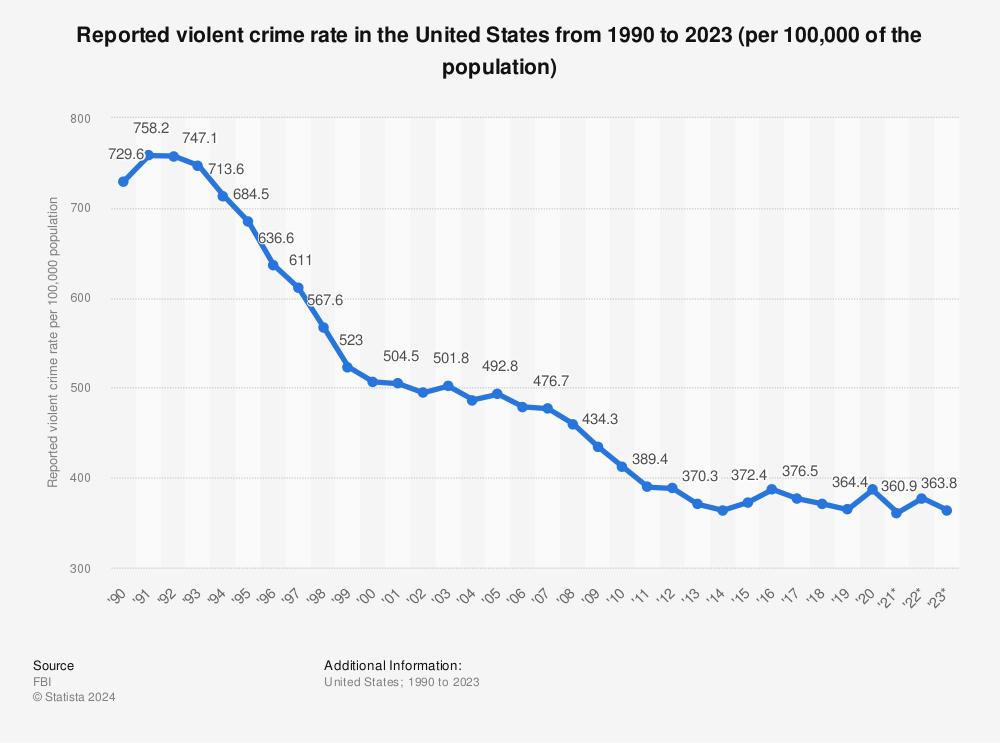
Violent crime in the United States declined by 4.5% last year, according to newly released data from the Federal Bureau of Investigation. The drop marks a notable shift in public safety trends amid ongoing concerns about crime rates in various communities nationwide. The FBI’s report, which compiles statistics from law enforcement agencies across the country, offers valuable insights into the evolving landscape of violent offenses and law enforcement efforts.
Violent Crime Rates Decline Nationwide FBI Data Reveals
Recent statistics released by the FBI illustrate a significant downturn in violent crime across the United States, signaling promising shifts in public safety trends. The overall decrease of 4.5% compared to the previous year suggests effective law enforcement strategies and community interventions are taking hold nationwide. Key offenses such as aggravated assault, robbery, and homicide all experienced notable declines, highlighting progress in curbing dangerous criminal activity.
The data also reveals interesting regional variations and demographic patterns worth noting:
- Urban centers saw the most dramatic drops, often exceeding the national average.
- Suburban and rural areas reported smaller but still meaningful reductions.
- Violent incidents involving firearms decreased by approximately 3%, suggesting improvement in gun violence prevention efforts.
| Crime Type | 2022 Incidents | 2023 Incidents | % Change |
|---|---|---|---|
| Homicide | 20,500 | 19,200 | -6.3% |
| Robbery | 81,000 | 77,500 | -4.3% |
| Aggravated Assault | 350,000 | 337,000 | -3.7% |
Key Factors Contributing to the Reduction in Violent Crime
Several pivotal factors have driven the noticeable decline in violent crime across the United States. Enhanced community policing stands out, with law enforcement agencies focusing efforts on building trust and collaboration within neighborhoods. This approach, emphasizing de-escalation and proactive engagement, has played a significant role in preventing conflicts before they escalate. Additionally, advances in technology, such as improved surveillance systems and data analytics, have empowered police departments to respond swiftly and solve crimes more efficiently.
Social and economic shifts also contribute significantly to this downward trend. Increased access to social services, mental health programs, and youth outreach initiatives are helping address root causes of violence. Economic opportunities and educational programs aimed at at-risk populations foster stability and reduce incentives for criminal behavior. Key factors include:
- Community engagement: Strengthening relationships between police and residents.
- Technological tools: Utilization of body cameras and predictive policing models.
- Social intervention: Expansion of support networks for vulnerable groups.
- Economic support: Job training and education targeting high-crime areas.
| Contributing Factor | Impact | Examples |
|---|---|---|
| Community Policing | Crime prevention through trust | Neighborhood watches, town halls |
| Technology Upgrades | Faster investigations | Surveillance cameras, data analytics |
| Social Programs | Reduced repeat offenses | Youth counseling, rehab initiatives |
| Economic Development | Lower crime incentives | Job training, educational access |
Impact of Law Enforcement Strategies on Crime Trends
Recent FBI statistics highlight a significant 4.5% decline in violent crime across the nation, a trend experts attribute in part to revamped law enforcement strategies. These tactics emphasize data-driven deployment, community policing, and targeted interventions aimed at high-risk areas. By increasing patrols in vulnerable neighborhoods and fostering collaboration with local residents, law enforcement agencies have successfully disrupted crime networks and reduced opportunities for violent offenses.
Key strategies contributing to this downward trend include:
- Enhanced use of predictive analytics to allocate resources efficiently
- Community engagement programs fostering cooperation and trust
- Focused deterrence initiatives addressing repeat offenders
Such approaches are supported by measurable outcomes. The table below offers a simplified snapshot of violent crime categories and their respective rate changes based on FBI findings.
| Crime Category | Percentage Change |
|---|---|
| Homicide | -3.8% |
| Aggravated Assault | -5.7% |
| Robbery | -4.2% |
| Rape | -4.9% |
Policy Recommendations for Sustaining Crime Reduction Gains
Enhancing Community Policing Initiatives: Strengthening the trust between law enforcement agencies and the communities they serve remains pivotal. To sustain the recent decline in violent crime, law enforcement should prioritize transparency, accountability, and community engagement. Programs focusing on youth outreach, mental health support, and neighborhood collaboration have proven effective. Emphasizing training in de-escalation techniques and cultural competency will better equip officers to handle complex situations while fostering public cooperation.
Investing in Social and Economic Supports: Crime reduction goes beyond policing and demands comprehensive investment in social infrastructure. Expanding access to education, job training, affordable housing, and mental health services can address root causes of violence. Policymakers should consider a multi-sector approach, involving partnerships between local governments, nonprofits, and private sectors. This holistic strategy helps create safer environments by reducing systemic inequalities that often correlate with crime rates.
| Policy Focus | Key Actions | Expected Outcome |
|---|---|---|
| Community Policing | Enhanced training, outreach programs | Improved trust, faster conflict resolution |
| Economic Supports | Job creation, education funding | Reduced crime through opportunity |
| Social Services | Mental health, housing support | Lower recidivism and violence rates |
The Way Forward
The recent FBI data indicating a 4.5% decline in violent crime across the United States offers a cautiously optimistic outlook for law enforcement and communities alike. While this decrease marks progress in addressing public safety concerns, experts emphasize the need for continued vigilance and comprehensive strategies to sustain and build upon these gains. As policymakers and local officials analyze the factors contributing to this downward trend, the focus remains on ensuring that the momentum translates into lasting improvements nationwide.