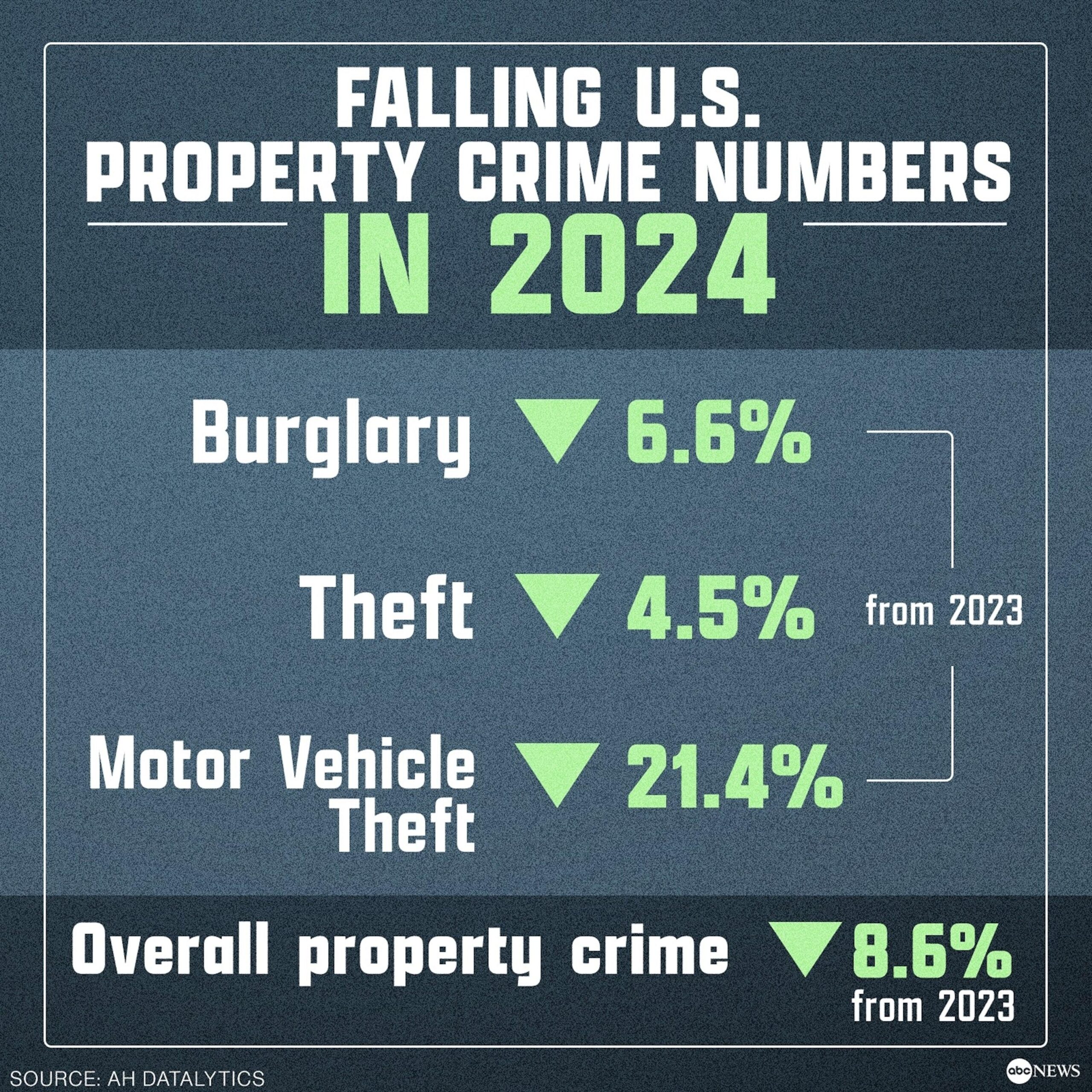
In a notable development for public safety, the FBI has reported a nationwide decline in crime rates across the United States in 2024. According to the latest data released, key indicators show reductions in violent crime and property offenses, signaling a positive trend after years of fluctuating figures. This report provides a comprehensive overview of the evolving landscape of criminal activity, offering insights into regional variations and the factors contributing to the overall decrease.
US Crime Trends Show Significant Decline in Violent Offenses
Recent data from the FBI highlights a promising trend: a considerable drop in violent offenses across the United States. Key categories such as homicide, aggravated assault, and robbery have all recorded decreases, marking a notable shift compared to previous years. Experts attribute this positive change to a combination of enhanced community policing initiatives, advancements in technology, and targeted crime prevention programs.
Analyzing specific crime metrics reveals the following improvements nationwide:
- Homicide rates decreased by 9%, signaling improved public safety in urban centers.
- Robbery incidents fell by 7%, reflecting stronger law enforcement efforts and community engagement.
- Aggravated assaults saw a decline of 5%, attributed to proactive conflict resolution strategies.
| Crime Type | 2023 Rate | 2024 Rate | % Change |
|---|---|---|---|
| Homicide | 5.4 per 100,000 | 4.9 per 100,000 | -9% |
| Robbery | 80.1 per 100,000 | 74.5 per 100,000 | -7% |
| Aggravated Assault | 230.7 per 100,000 | 219.2 per 100,000 | -5% |
Factors Contributing to the Nationwide Drop in Crime Rates
The decline in crime rates across the United States in 2024 can be attributed to a combination of strategic law enforcement practices and socio-economic improvements. Enhanced community policing efforts have fostered stronger relationships between officers and residents, leading to increased trust and cooperation. Additionally, advancements in technology—such as predictive analytics and sophisticated surveillance systems—have enabled agencies to intervene proactively before crimes escalate. These modern tools, combined with focused initiatives on gun control and drug enforcement, have collectively contributed to the deterrence of criminal activities nationwide.
Supportive social programs have also played a critical role in reducing crime by addressing root causes like poverty, unemployment, and lack of education. Expanded access to mental health services and rehabilitation programs has helped divert potential offenders from entering the criminal justice system. Key factors include:
- Investment in youth outreach and education
- Improved economic opportunities in high-risk areas
- Collaboration between federal, state, and local agencies
- Community reintegration programs for former offenders
| Factor | Impact |
|---|---|
| Technology & Surveillance | +15% prevention effectiveness |
| Community Policing | +20% trust and cooperation |
| Economic Programs | -10% crime triggers |
| Mental Health Services | -12% repeat offenses |
Community Policing and Technology Innovations Play Key Roles
The decline in crime rates across the United States in 2024 is increasingly attributed to the strategic integration of community policing with cutting-edge technology. Law enforcement agencies nationwide have strengthened partnerships with local communities, fostering trust and collaborative problem-solving efforts. Officers are now more present in neighborhoods, attending community meetings and engaging directly with residents to identify and address safety concerns before they escalate.
Alongside these grassroots efforts, technology innovations have markedly improved crime prevention and response. Advanced data analytics, predictive policing algorithms, and enhanced surveillance tools have equipped departments to pinpoint high-risk areas and deploy resources more efficiently. Key initiatives that contributed to the positive trends include:
- Real-time crime mapping that allows instant tracking and communication.
- Body-worn cameras increasing transparency and accountability.
- Smart 911 systems improving emergency response times.
- Integrated communication platforms connecting multiple agencies seamlessly.
| Technology | Purpose | Impact |
|---|---|---|
| Predictive Analytics | Forecast crime hotspots | Decreased violent incidents by 15% |
| Body Cameras | Evidence collection & accountability | Enhanced community trust |
| Smart 911 | Faster emergency dispatch | 20% quicker response times |
Policy Recommendations to Sustain and Enhance Crime Reduction Efforts
To build on the positive momentum of nationwide crime reduction, federal and local policymakers should prioritize data-driven approaches that enhance transparency and accountability. Investing in community policing programs that foster trust between law enforcement and residents proves essential for sustained progress. Additionally, expanding mental health services and substance abuse treatment options can address root causes that often lead to criminal behavior, reducing recidivism rates and promoting safer neighborhoods.
Innovative funding models can also support long-term crime prevention. Allocating resources towards technology upgrades—such as predictive analytics and real-time crime mapping—empowers departments with cutting-edge tools. Below is a strategic framework for resource distribution recommended for the next fiscal year:
| Category | Proposed Allocation | Key Objective |
|---|---|---|
| Community Engagement | 35% | Strengthen police-community relations |
| Mental Health & Rehab Programs | 25% | Address underlying factors of crime |
| Technology & Innovation | 30% | Enhance law enforcement capabilities |
| Training & Education | 10% | Continuous skill development |
Closing Remarks
The latest FBI report indicates a significant decline in crime rates across the United States in 2024, marking a hopeful shift in nationwide public safety trends. While challenges remain, law enforcement agencies and communities alike continue to play crucial roles in sustaining this progress. As this data shapes policy discussions and resource allocation, officials emphasize the importance of ongoing collaboration to maintain and further the downward trajectory in crime.