
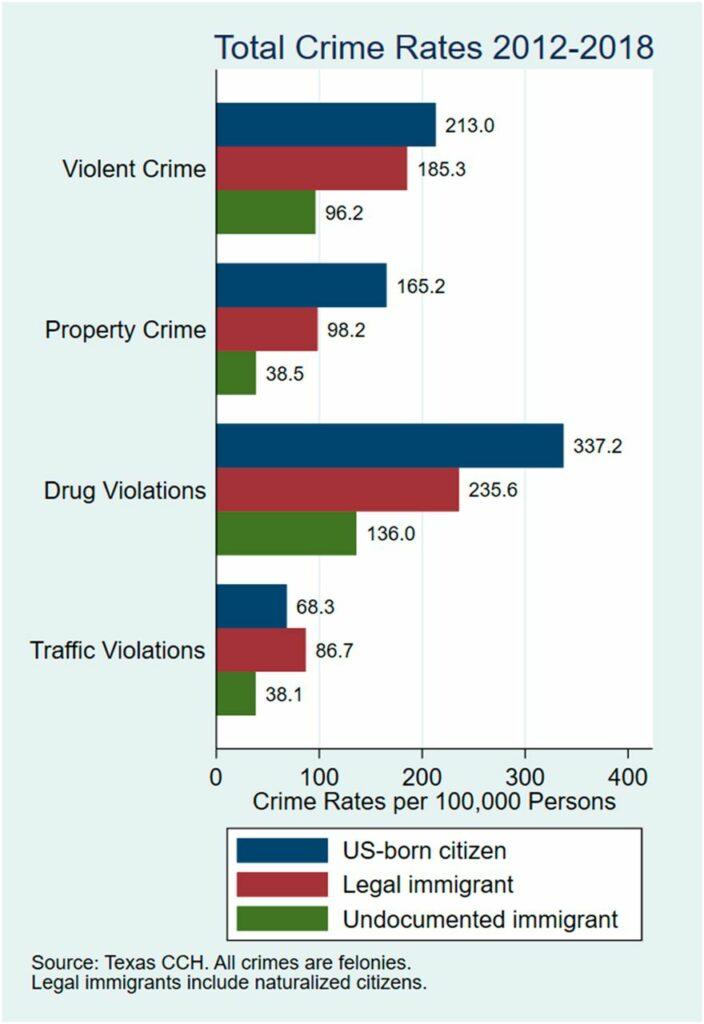
In recent years, public discourse surrounding immigration in the United States has often been overshadowed by concerns about crime rates allegedly linked to immigrant populations. However, a comprehensive analysis by the American Immigration Council challenges these fears head-on, revealing that immigrants do not commit more crimes than native-born citizens. This report seeks to cut through the alarming rhetoric with data-driven insights, highlighting the complex realities behind immigration and public safety in America.
Immigration and Crime Rates Debunked by Comprehensive Data Analysis
Extensive research and crime data reviewed by multiple independent organizations reveal that immigrants, both documented and undocumented, are less likely to commit crimes than native-born citizens. Contrary to popular myths perpetuated by fearmongering narratives, the statistics consistently show lower incarceration rates and fewer instances of violent crime among immigrant populations. These findings highlight the importance of distinguishing between anecdotal reports and comprehensive, evidence-based data to form fair and accurate perspectives on immigration and public safety.
- Data from the Cato Institute shows immigrants have a 50% lower incarceration rate than native-born Americans.
- The National Academy of Sciences confirms no significant link between immigration and higher crime rates.
- Urban Institute studies consistently find immigrant neighborhoods often experience lower crime levels than their non-immigrant counterparts.
| Population Group | Incarceration Rate (per 100,000) | Violent Crime Rate (per 100,000) |
|---|---|---|
| Native-Born Citizens | 450 | 200 |
| Legal Immigrants | 225 | 110 |
| Undocumented Immigrants | 150 | 90 |
The Role of Media in Shaping Public Perception of Immigrant Criminality
Throughout history, media outlets have played a significant role in influencing public opinion about immigrant communities, often emphasizing crime-related stories involving immigrants disproportionately. This selective reporting fuels misconceptions and fear, creating an illusion that immigrants commit more crimes than native-born citizens, despite evidence to the contrary. Sensational headlines and repetitive coverage of isolated incidents contribute to a narrative that diverges from reality, undermining nuanced discussions about immigration policy and social cohesion.
Studies tracking crime rates consistently reveal that immigrants — both undocumented and legal — exhibit lower or similar rates of criminal behavior compared to U.S.-born populations. However, media framing frequently distorts these facts through:
- Overrepresentation: Highlighting immigrant suspects disproportionately in crime reports.
- Lack of Context: Omitting socio-economic factors influencing crime rates across all demographics.
- Political Agendas: Using immigration crime stories to push particular policy positions or electoral goals.
| Media Behavior | Effect on Public Perception |
|---|---|
| Frequent crime-focused headlines | Amplifies fear and stereotypes |
| Minimal coverage of immigrant positive contributions | Skews overall understanding |
| Selective reporting | Inaccurate portrayal of immigrant populations |
Policy Implications for Immigration Enforcement Based on Evidence
Evidence-based research underscores the critical need to re-evaluate current immigration enforcement policies that are often driven by misconceptions rather than facts. Studies consistently show that immigrants, regardless of their legal status, are less likely to commit crimes than native-born citizens. This reality challenges policies that prioritize harsh enforcement measures, which do not correlate with increased public safety and instead strain community trust and resources. Policymakers should focus on strategies that promote integration and protect immigrant communities, rather than punitive approaches fueled by fearmongering narratives.
Effective immigration enforcement should be aligned with data-driven best practices that enhance both security and social cohesion. Key recommendations include:
- Prioritizing serious offenses: Concentrate law enforcement efforts on violent and repeat criminals rather than low-level, non-violent immigration violations.
- Building community partnerships: Work collaboratively with immigrant communities to encourage reporting of crimes and foster cooperation with local law enforcement.
- Implementing transparency measures: Ensure immigration policies and procedures are clear and consistently applied to prevent discrimination.
| Policy Focus | Evidence-Based Outcome |
|---|---|
| Targeted Criminal Enforcement | Reduces crime without unnecessary detentions |
| Community Engagement | Improves trust and crime reporting |
| Clear Enforcement Guidelines | Reduces bias and protects civil liberties |
Community Integration Strategies to Foster Safety and Inclusion
Creating neighborhoods where immigrants feel both valued and secure requires intentional efforts from local governments, organizations, and residents alike. Effective strategies center around fostering open communication, cultural exchange, and mutual respect. Programs such as community liaison committees, multicultural festivals, and neighborhood watch groups have shown measurable success in reducing misconceptions and building trust. These initiatives encourage residents to engage directly with newcomers, enabling a clearer understanding of shared goals and challenges while dismantling the false narratives that often fuel fear.
Practical measures often include:
- Language access services: Providing translation for public services and law enforcement to ensure full participation.
- Cultural competency training: Supporting police and community leaders in understanding diverse backgrounds.
- Inclusive public spaces: Designing parks and community centers that highlight immigrant contributions.
- Partnerships with immigrant advocacy groups: Promoting safety alongside empowerment.
Implementing these strategies not only improves public safety but also contributes to social cohesion, allowing communities to thrive economically and socially without relying on unfounded fears around immigration and crime.
| Strategy | Impact on Community Safety | Inclusion Benefit |
|---|---|---|
| Language Access Services | Improved crime reporting and access to resources | Empowers non-English speakers |
| Cultural Competency Training | Reduces misunderstandings during police interactions | Builds mutual respect |
| Multicultural Community Events | Strengthens community bonds | Celebrates diversity |
Key Takeaways
In summary, the evidence consistently contradicts the narrative that immigrants contribute disproportionately to crime in the United States. As the American Immigration Council highlights, fearmongering often distorts public perception and policy debates. Understanding the facts is essential to fostering informed discussions and creating policies grounded in reality rather than rhetoric. Moving forward, it is crucial for policymakers and the public alike to recognize immigrants’ positive contributions and avoid perpetuating unfounded fears.