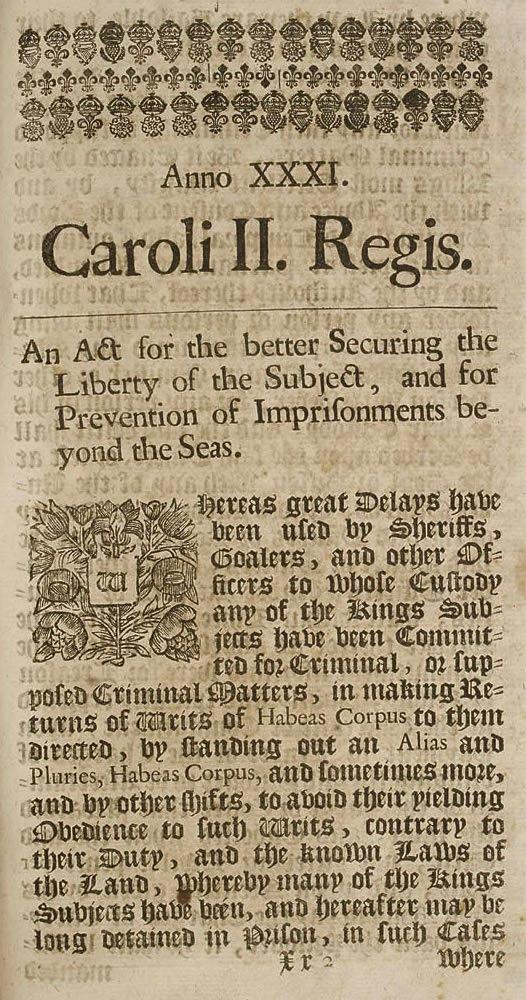
Habeas corpus, a fundamental legal principle safeguarding individual freedom against unlawful detention, has long stood as a cornerstone of American justice. Recently, discussions surrounding its suspension have emerged amid contentious debates over national security and immigration policies. The Trump administration’s stance on potentially curtailing this constitutional right has sparked significant legal and political controversy. This article explores the historic importance of habeas corpus, the legal framework that protects it, and the key statements made by the Trump administration regarding its possible suspension, providing a comprehensive overview of a critical issue at the intersection of law and governance.
Understanding Habeas Corpus and Its Role in American Law
Habeas corpus, often called the “Great Writ,” is a fundamental legal safeguard that protects individuals from unlawful detention. Originating from English common law, it has been firmly embedded in American constitutional law to ensure that no person can be imprisoned without just cause or due process. The writ operates as a powerful judicial review mechanism, allowing courts to examine the legality of a detainee’s imprisonment. In essence, it requires authorities to present valid evidence or justification for a person’s detention, maintaining a critical check on executive power and reinforcing individual liberty.
The Trump administration sparked significant debate by discussing the potential suspension of habeas corpus for certain detainees, particularly in the context of national security and the ongoing “war on terror.” This unprecedented consideration raised concerns about the balance between civil liberties and security measures. Critics warned that suspending habeas corpus could undermine constitutional rights and set dangerous precedents. Supporters argued for enhanced executive authority to address emerging threats. The discussion highlighted the tension between safeguarding public safety and preserving foundational legal protections.
- Legal Foundation: Habeas corpus is enshrined in Article 1, Section 9 of the U.S. Constitution.
- Scope of Use: Applies to all persons detained, including non-citizens.
- Historical Precedent: Rarely suspended, even during wars or emergencies.
- Controversy: Discussions about suspension often evoke constitutional and ethical dilemmas.
| Aspect | Trump Administration Position | Implications |
|---|---|---|
| National Security | Advocated for stronger executive powers | Potential erosion of legal protections |
| Civil Liberties | Viewed suspension as last resort | Raised constitutional challenges |
| Judicial Oversight | Sought to limit court interventions | Possible reduction in legal recourse |
The Trump Administration’s Stance on Suspending Habeas Corpus
During his administration, Donald Trump sparked significant debate over the potential suspension of habeas corpus, particularly in the context of national security and immigration enforcement. The administration suggested that suspending this fundamental legal right might be necessary in extreme circumstances, such as dealing with terrorism or widespread civil unrest. This stance raised alarms among constitutional experts and civil rights advocates who warned that suspending habeas corpus could undermine the very principles of due process and individual liberty that protect Americans from arbitrary detention.
Key points surrounding the Trump administration’s position include:
- Executive authority: The administration emphasized the president’s powers to detain certain individuals without immediate judicial review if deemed a threat.
- National security concerns: Justifications focused on the need to respond swiftly to acts of terrorism or violent threats.
- Legal debates: Critics argued that any suspension without Congressional approval would be unconstitutional and could face legal challenges.
| Aspect | Trump Administration View | Opposition Concerns |
|---|---|---|
| Scope of Suspension | Limited to national emergencies | Potential for abuse and overreach |
| Checks and Balances | Presidential discretion emphasized | Requires Congressional oversight |
| Legal Foundation | Interpretation of wartime powers | Constitutional protection paramount |
Legal and Constitutional Implications of Suspending Habeas Corpus
The suspension of habeas corpus poses serious constitutional questions, as this right is enshrined in Article I, Section 9 of the U.S. Constitution, stating it shall not be suspended except “when in Cases of Rebellion or Invasion the public Safety may require it.” This clause acts as a critical check on executive power, designed to prevent unlawful detention and uphold individual liberties. Any move to suspend habeas corpus raises debates over the balance between national security and civil freedoms, particularly when invoked without clear, imminent threats. Critics argue that such actions could undermine judicial oversight and set dangerous precedents for executive overreach.
The Trump administration’s comments on the matter have sparked intense discussion across political and legal spheres. While the administration asserted the government’s authority in times of crisis, legal experts stress the need for stringent criteria before suspending habeas corpus. The concerns include potential misuse during political turmoil and the impact on due process rights. Here is a brief overview of key constitutional considerations outlined by constitutional scholars:
| Constitutional Principle | Impact of Suspension | Expert Concern |
|---|---|---|
| Separation of Powers | Limits executive detention powers | Risk of executive branch overreach |
| Judicial Review | Ensures government accountability | Potential erosion if suspended |
| Due Process Rights | Protects against unlawful imprisonment | May be compromised during suspension |
- Historical Precedence: Suspension has been rare and tightly controlled through history.
- Legal Safeguards: Must be justified by clear and present danger.
- Checks and Balances: Congress and courts retain essential roles.
Expert Recommendations for Protecting Civil Liberties Amid Policy Changes
In light of recent discussions around suspending habeas corpus, experts stress the importance of maintaining robust legal protections to safeguard individual freedoms against sweeping policy shifts. Civil liberties advocates recommend close scrutiny of any efforts that might weaken judicial oversight, emphasizing the need for transparent legislative processes and strong judicial independence to prevent executive overreach. These measures ensure that citizens retain access to due process even in times of national security concerns.
Legal scholars and human rights organizations propose a framework centered on:
- Preserving judicial review: Guaranteeing courts retain authority to review detention cases promptly.
- Enhancing legislative checks: Instituting clearer limits on executive powers during emergencies.
- Public awareness campaigns: Educating citizens on their rights and legal recourse options.
- Regular policy assessments: Reviewing the impact of any temporary measures on civil liberties quarterly.
| Recommendation | Purpose | Expected Outcome |
|---|---|---|
| Judicial Oversight | Prevent unlawful detentions | Protect due process |
| Legislative Limits | Define emergency powers | Reduce abuse risk |
| Public Education | Increase rights awareness | Empower citizens |
| Policy Reviews | Monitor civil liberties impact | Inform adjustments |
In Summary
In summary, habeas corpus remains a fundamental legal safeguard designed to protect individual freedom against unlawful detention. The Trump administration’s discussions around suspending or limiting this right sparked significant legal and constitutional debates, highlighting the tension between national security concerns and civil liberties. As this issue continues to unfold, it underscores the enduring importance of habeas corpus in the American justice system and the ongoing need for vigilance in balancing governmental power with the protection of individual rights.