
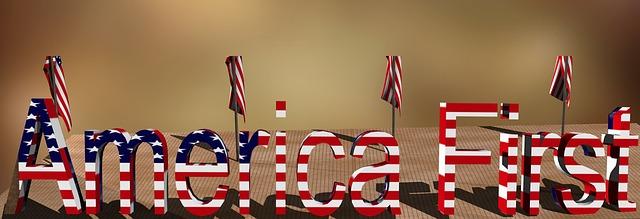
As political polarization intensifies and extremist rhetoric gains traction in the United States, comparisons to the Nazi era have emerged with increasing frequency—and controversy. In a recent discussion published by The Guardian, a leading expert on Christian nationalism argues that the current moment demands urgent reflection through this historical lens. The expert contends that warning signs reminiscent of those that led to the rise of Nazi Germany are manifesting today, particularly in the fusion of religion and politics. This article explores the provocative claim that the time to draw parallels between contemporary US politics and the Nazi era is not in the distant past or future, but now.
Contextualizing Comparisons Between US Politics and the Nazi Era
Comparing contemporary US politics to the Nazi era is not a decision to be taken lightly; it requires a nuanced understanding of both historical context and present-day realities. Experts emphasize that such comparisons should be grounded in clear evidence of rising authoritarian tendencies, systemic erosion of democratic norms, and the propagation of exclusionary nationalist ideologies. As one scholar on Christian nationalism highlights, this moment demands vigilance, drawing parallels not to sensationalize but to illuminate the dangers posed by current political dynamics that echo elements of the past.
Key factors underpinning this contextual comparison include:
- Expansion of political rhetoric that scapegoats minority groups
- Undermining of institutional checks and balances
- Promotion of a unifying ideology that excludes dissent
- Utilization of state mechanisms to consolidate power
| Characteristic | Nazi Era | Current US Politics (as per expert) |
|---|---|---|
| Use of Propaganda | State-controlled media with heavy censorship | Polarized media ecosystems and disinformation |
| Political Unity | Forced ideological conformity | Rise of exclusionary nationalist movements |
| Targeted Groups | Ethnic and religious minorities | Racial, religious, and immigrant communities |
| Democratic Safeguards | Dismantled systematically | Increasing challenges and delegitimization |
Understanding the Role of Christian Nationalism in Modern Political Discourse
Christian nationalism has emerged as a pivotal force shaping political agendas, particularly in the United States, where it blends religious identity with national patriotism. This movement’s influence extends beyond mere policy preferences, targeting the cultural fabric and collective memory of the nation. Advocates often promote a vision intertwining conservative Christian values with American identity, framing political issues as battles over moral and spiritual survival. Recognizing this synthesis is crucial for understanding how rhetoric evolves and why some comparisons to historical extremist regimes, though controversial, gain traction in modern discourse.
Key characteristics of Christian nationalism include:
- Emphasis on a Christian foundational identity: Asserting that the U.S. was explicitly founded as a Christian nation and should be governed accordingly.
- Resistance to pluralism: Opposition to secularism and religious diversity interpreted as threats to national unity.
- Political mobilization around culture war issues: Utilizing debates on abortion, LGBTQ+ rights, and education to galvanize supporters.
| Aspect | Christian Nationalism | Nazi Era Parallels |
|---|---|---|
| Identity | Religious-national fusion | Ethno-national supremacy |
| Political Strategy | Mobilize cultural anxieties | Propaganda & authoritarian control |
| Target Groups | Religious minorities, secularists | Ethnic, religious minorities |
These overlaps illuminate why experts urge caution but also seriousness when drawing historical analogies. The invocation of Nazi Germany serves not as a direct equivalence but as a warning against unchecked nationalism that discards democratic norms and pluralistic values. As debates intensify, understanding the nuanced role Christian nationalism plays in contemporary politics helps contextualize why some scholars advocate immediate comparison, especially as signs of authoritarianism become more visible.
Assessing the Risks of Delayed Recognition of Authoritarian Tendencies
The delay in identifying and addressing authoritarian tendencies within political systems can lead to irreversible consequences, as history has repeatedly demonstrated. Early warnings often go unheeded due to a combination of complacency, political polarization, and the normalization of extremist rhetoric. Experts argue that postponing critical scrutiny risks allowing these tendencies to entrench themselves, making reversal more difficult and damaging democratic institutions. A timely response requires vigilance not only from policymakers but also from civil society and the media, which serve as essential watchdogs.
Key indicators frequently overlooked include:
- Undermining of judicial independence
- Targeting of minority groups through legislation
- Consolidation of executive power beyond constitutional limits
- Discrediting of the press and proliferating misinformation
Without prompt recognition and resistance to these signs, societies risk sliding into patterns reminiscent of historical authoritarian regimes. The cost of inaction is not just political but deeply social, threatening the fabric of pluralistic values that underpin democracy.
| Risk Factor | Potential Outcome |
|---|---|
| Delayed media scrutiny | Erosion of public trust in information |
| Ignoring judicial weakening | Loss of checks and balances |
| Political polarization | Heightened social division |
| Normalization of extremist rhetoric | Desensitization to authoritarian policies |
Expert Recommendations for Engaged and Informed Political Vigilance
Political vigilance today demands more than passive observation; it calls for a proactive, informed stance rooted in historical awareness. Experts emphasize the urgent need to recognize warning signs reminiscent of past authoritarian regimes, especially when ideologies rooted in exclusionary religious nationalism threaten democratic values. The comparison to the Nazi era is not just an alarmist metaphor but a critical analytical tool to understand the dynamics of political power, propaganda, and societal manipulation. Engaging with diverse sources, questioning narratives, and actively participating in civic discourse are essential practices for those committed to safeguarding democratic integrity.
To cultivate this engagement effectively, experts recommend adopting a framework that includes:
- Critical media literacy: Evaluating information sources rigorously to discern bias and misinformation.
- Historical context awareness: Understanding how past totalitarian movements mobilized support and silenced dissent.
- Community dialogue: Encouraging open conversations that bridge ideological divides without sacrificing factual integrity.
Below is a simple guide illustrating key markers to watch for when assessing political movements in comparison to historic authoritarian models:
| Marker | Historical Example | Contemporary Signs |
|---|---|---|
| Propaganda Techniques | Use of scapegoating, state-controlled media | Disinformation campaigns, echo chambers online |
| Authoritarian Rhetoric | Calls for “purity” and national rebirth | Political slogans emphasizing “restoration” and exclusion |
| Suppression of Opposition | Censorship, persecution of dissenters | Legal attacks on journalists, protests |
In Conclusion
As debates around the state of American democracy intensify, this expert’s warning underscores the urgency of confronting troubling parallels with the past. While comparisons to the Nazi era are often met with discomfort or dismissal, the growing influence of Christian nationalism in US politics suggests that vigilance and critical reflection are more necessary than ever. Recognizing these patterns today may be key to preventing a repeat of history’s darkest chapters.