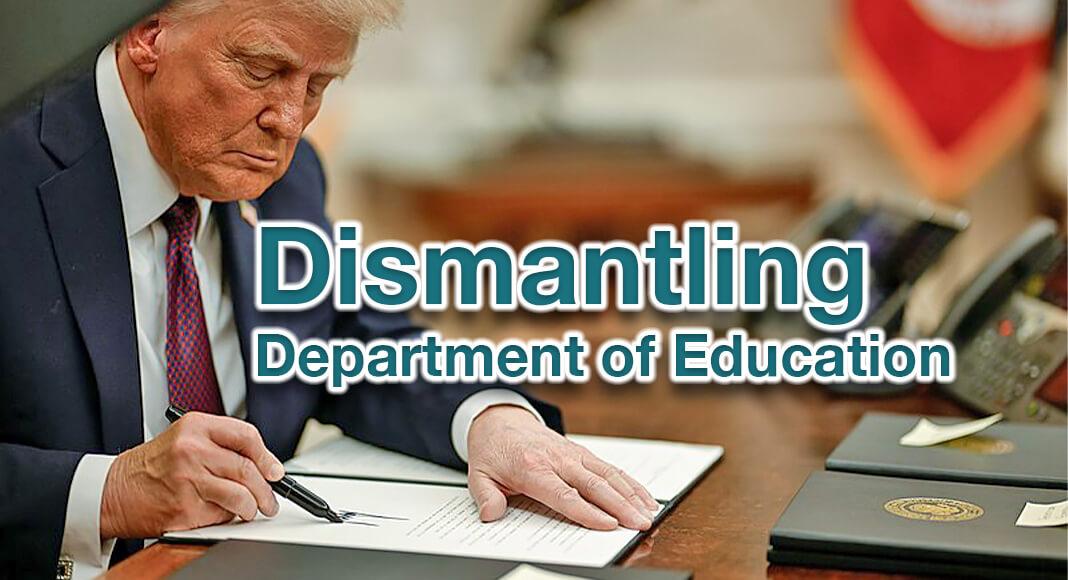
In a historic and controversial move, former President Donald Trump has ordered the dismantling of the United States Department of Education, a decision that is poised to reshape the nation’s approach to schooling and federal oversight. Announced late Tuesday, this directive marks the most significant reorganization of the federal education apparatus in decades, igniting intense debate over the future of education policy, funding, and equity across American schools. This article explores the implications of Trump’s order, the responses from lawmakers and educators, and what this unprecedented shift means for students, teachers, and the broader education system.
Trump Orders Dismantling of US Education Department Impact on Federal Education Policy
President Trump’s directive to dismantle the US Education Department signals a seismic shift in federal oversight of education. This move dramatically reduces the federal government’s role in shaping nationwide education standards, funding, and policies, potentially returning greater authority to individual states and local school districts. Key federal initiatives, such as standardized testing mandates and civil rights enforcement in schools, are expected to be re-evaluated or eliminated, igniting a fierce debate over educational equity and quality across the country.
Implications of the dismantling include:
- States gaining increased control over curriculum development and assessment standards.
- Potential reduction in federal funding for public schools, impacting low-income districts disproportionately.
- Changes in enforcement of policies related to discrimination, special education, and student data privacy.
- Increased reliance on private and charter schools as federal regulations ease.
| Aspect | Current Federal Role | Post-Dismantling Outlook |
|---|---|---|
| Curriculum Standards | Guidance and oversight | State-led, varied standards |
| Funding | Distributes grants and aid | Likely reduced federal grants |
| Civil Rights Enforcement | Monitors and enforces compliance | Delegated to states, potential lax enforcement |
| Special Education | Coordinates nationwide services | Uneven services across states |
Potential Effects on Public Schools and Student Funding Across the Nation
The directive to dissolve the US Department of Education poses significant challenges to funding mechanisms that support public schools across the country. Without a central federal entity to administer grants and oversee compliance, many school districts could face delays or reductions in crucial financial aid. Programs aimed at assisting low-income students, special education, and infrastructure improvements risk losing their structured oversight and consistent funding flow, potentially deepening educational inequities nationwide. Experts warn that state and local governments may struggle to fill this federal void, leading to a patchwork of funding and support that lacks uniform standards.
Key concerns voiced by educators and policymakers include:
- Disruption in Title I funding, which targets schools with high numbers of disadvantaged students.
- Uncertainty around accountability measures that track student performance and school effectiveness.
- Loss of national oversight that ensures civil rights protections within schools.
The repercussions could be particularly severe in rural or underfunded districts, where federal dollars often represent a significant portion of the education budget. Without streamlined coordination, disparities in resource allocation may widen, impacting the quality of education delivered to millions of American children.
| Funding Type | Impact | Potential Outcome |
|---|---|---|
| Title I Grants | Reduced supervision and delays | Lower support for disadvantaged students |
| Special Education Aid | Fragmented administration | Inadequate resources for special needs programs |
| Federal Infrastructure Funds | Uncertain distribution | Deferred school repairs and upgrades |
Reactions from Educators and Lawmakers on the Department’s Elimination
Educators across the nation have expressed deep concerns about the implications of this unprecedented move. Many fear that eliminating the Department of Education will lead to increased fragmentation in policy enforcement and funding distribution, potentially widening the educational disparities among states. Teachers’ unions and advocacy groups have emphasized the risks of losing a central authority that currently oversees educational standards, civil rights protections, and programs supporting underprivileged students. Critics argue that the dismantling could undermine decades of progress in ensuring equal access to quality education.
- State Superintendents: Worry about inconsistent education policies.
- Teacher Unions: Concerned over job security and federal funding cuts.
- Education Advocates: Highlight potential rollback of special education and Title IX protections.
On the legislative front, reactions are sharply divided. Some Republican lawmakers have voiced support, arguing the move will reduce federal overreach and return control of education to the states. Conversely, numerous Democrats and moderate Republicans have condemned the decision, warning of lasting damage to the nation’s educational infrastructure. Congressional hearings are slated to address the potential fallout, focusing on the transition plan and safeguarding key programs during the phase-out period.
| Lawmakers | Position | Key Concern |
|---|---|---|
| Senator Jane Doe (D) | Opposed | Increased educational inequality |
| Representative John Smith (R) | Supportive | State control over curriculum |
| Senator Maria Lopez (D) | Opposed | Loss of federal student protections |
Strategies for Schools and Communities to Adapt to New Federal Absence
Schools and communities face an urgent need to innovate and reorganize in the wake of federal directional shifts. Local education authorities can no longer rely on overarching policies and funding streams that once offered stability and standardized guidance. To counter this vacuum, grassroots leadership must step forward, fostering collaborations with local businesses, nonprofits, and civic organizations to bridge gaps in resources and services. Enhanced community engagement will be crucial, creating tailored solutions that reflect the unique needs of each region rather than a one-size-fits-all federal template.
Administrators and educators should also prioritize transparent communication frameworks to keep parents and stakeholders informed and involved. Implementing flexible attendance policies and support systems that account for diverse socioeconomic challenges will help mitigate potential attendance declines. Consider the following foundational strategies:
- Develop multi-sector partnerships to pool funding and expertise.
- Invest in digital platforms for remote learning and real-time updates.
- Create community advisory boards to guide local decision-making.
| Strategy | Expected Outcome |
|---|---|
| Local Partnership Building | Improved resource access and diversified funding |
| Flexible Attendance Policies | Reduction in absenteeism and dropout rates |
| Community Advisory Boards | Inclusive, data-driven decision-making |
Wrapping Up
As the Trump administration moves forward with plans to dismantle the U.S. Department of Education, the repercussions for federal education policy and millions of students across the country remain uncertain. Supporters argue the move will increase state and local control, while critics warn of potential disruptions in funding and the loss of critical oversight. With debates intensifying in Washington and beyond, the coming months will be critical in shaping the future of American education under this unprecedented shift. AP News will continue to provide comprehensive coverage and analysis as this story develops.