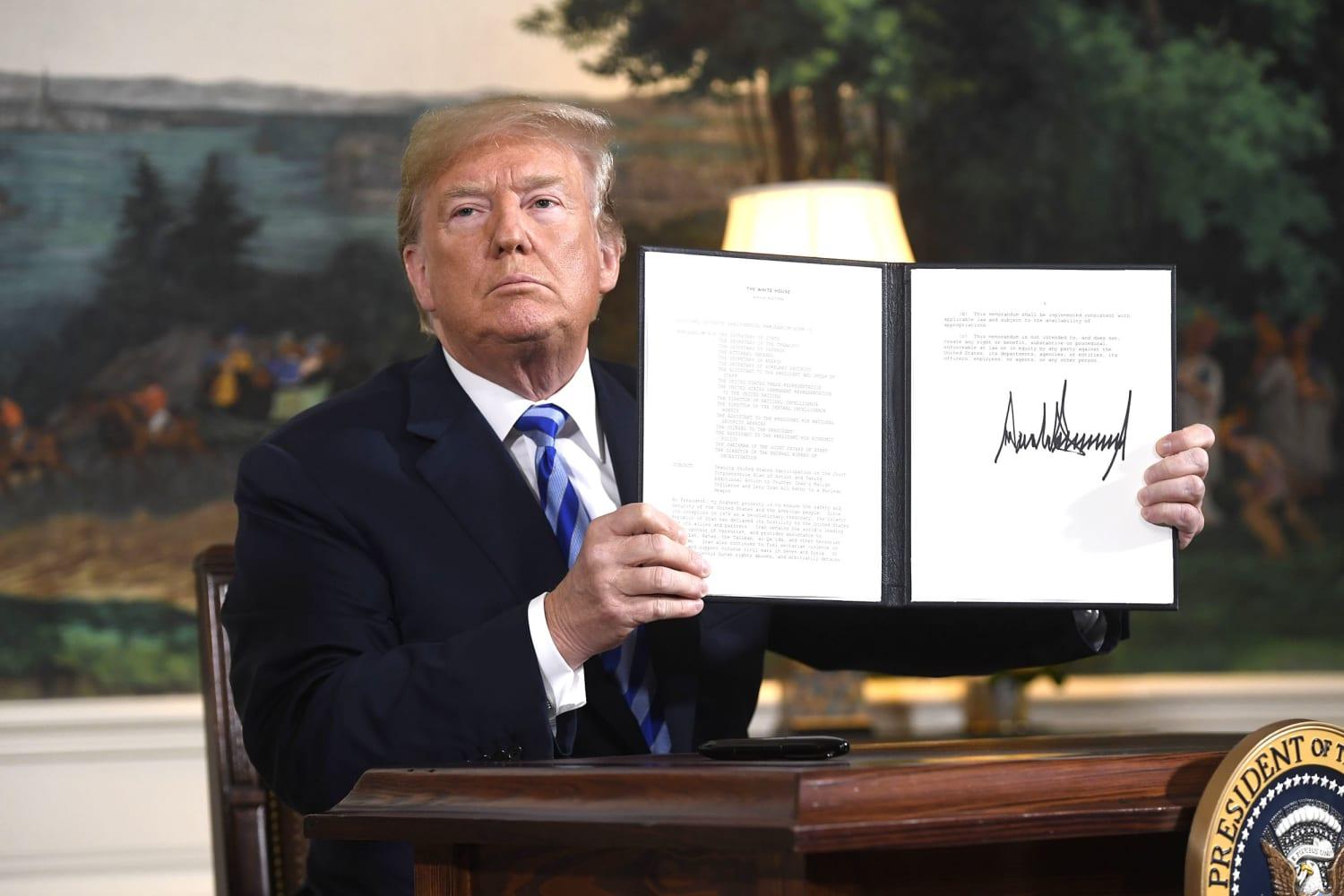
In 2018, President Donald Trump made the controversial decision to withdraw the United States from the Joint Comprehensive Plan of Action (JCPOA), commonly known as the Iran nuclear deal. This move marked a significant shift in U.S. foreign policy and set the stage for escalating tensions between Washington and Tehran. As recent U.S. military strikes against Iran-linked targets reignite global focus on the fraught relationship, this article revisits the motivations behind Trump’s withdrawal from the agreement, exploring the strategic, political, and security considerations that shaped one of the most consequential foreign policy decisions of his administration.
Background and key terms of the Iran nuclear deal under the Obama administration
The Iran nuclear deal, officially known as the Joint Comprehensive Plan of Action (JCPOA), was a landmark agreement reached in 2015 under the Obama administration. It aimed to curb Iran’s nuclear program in exchange for the lifting of economic sanctions, thus fostering diplomatic engagement over conflict. The deal imposed strict limitations on Iran’s uranium enrichment levels and stockpiles, enhanced monitoring by the International Atomic Energy Agency (IAEA), and mandated the dismantling of certain nuclear facilities. Key participants included the P5+1 countries—United States, United Kingdom, France, Russia, China, and Germany—working collectively to prevent Tehran from obtaining nuclear weapons capability.
Crucial terms to understand:
- Enrichment caps: Iran agreed to limit uranium enrichment to 3.67%, well below weapons-grade levels.
- Inspections: The IAEA received unprecedented access to Iranian nuclear sites to verify compliance.
- Sanctions relief: Economic and financial sanctions were lifted gradually, conditioned on Iran’s adherence to the deal.
- Sunset clauses: Some restrictions were set to expire after 10-15 years, a point of contention for critics fearing potential future nuclear escalation.
| Term | Description |
|---|---|
| Uranium Enrichment Limit | 3.67% maximum, no weapons-grade enrichment |
| Breakout Time | At least 12 months to develop a nuclear weapon |
| Sanctions Lift | Phased economic relief tied to compliance |
| IAEA Access | Regular inspections and monitoring |
Trump administration’s stated reasons and criticisms for withdrawing from the agreement
In 2018, the Trump administration announced its withdrawal from the Joint Comprehensive Plan of Action (JCPOA), commonly known as the Iran nuclear deal. The White House framed this decision around several key criticisms: the deal’s failure to permanently block Iran’s nuclear ambitions, its inability to address Iran’s ballistic missile program, and a perceived lack of enforcement mechanisms. President Trump and his advisers argued that the agreement was “defective at its core,” enabling Iran to “continue its nuclear breakout timeline” after certain compliance periods expired.
Beyond nuclear concerns, the administration also highlighted Iran’s destabilizing activities across the Middle East as a major factor undermining the deal’s credibility. They pointed to Tehran’s involvement in conflicts in Syria, Yemen, and Iraq, emphasizing that the agreement did little to curtail Iran’s regional influence or its funding of militant groups. These aspects fueled the administration’s stance that the JCPOA was insufficient as a broader strategy to curb Iran’s ambitions. Key points cited included:
- Sunset clauses that lifted nuclear restrictions after a decade.
- Exclusion of Iran’s missile program from the agreement.
- Insufficient inspection regimes of suspect sites.
- Economic relief that may have bolstered Iran’s regional activities.
| Criticism | Trump Administration’s Claim |
|---|---|
| Sunset provisions | Allowed nuclear constraints to expire |
| Missile program | Not limited by the deal |
| Verification measures | Inadequate site access and inspections |
| Regional activities | Deal did not curb Iran’s destabilization |
Impact of the pullout on US-Iran relations and regional security dynamics
President Trump’s 2018 decision to withdraw from the Joint Comprehensive Plan of Action (JCPOA) marked a pivotal turning point in US-Iran relations. The move reignited tensions, with Tehran resuming uranium enrichment activities beyond the limits previously agreed upon. This action not only shattered a decade of diplomatic progress but also set the stage for a dangerous escalation in military confrontations and retaliatory measures. Washington’s “maximum pressure” campaign, characterized by sweeping sanctions and diplomatic isolation, aimed to curb Tehran’s regional ambitions but instead pushed Iran towards more aggressive posturing.
The fallout extended far beyond bilateral relations, reshaping the Middle East’s security landscape. Key impacts include:
- Heightened regional instability: Proxy conflicts intensified across Iraq, Syria, and Yemen, amplifying sectarian divides.
- Strained alliances: US relations with European allies became fraught as they sought to preserve the deal and counterbalance Iran’s retaliatory actions.
- Energy market volatility: Geopolitical risks surged, driving uncertainty in global oil supply chains.
- Shift in military dynamics: Enhanced missile testing and naval incidents increased fears of open conflict in strategic waterways.
| Year | Event | Consequences |
|---|---|---|
| 2018 | US Withdrawal from JCPOA | Sanctions Reimposed, Diplomacy Collapses |
| 2019 | Attack on Saudi Oil Facilities | Energy Market Shock, Increased Tensions |
| 2020 | Killing of Qasem Soleimani | Escalation in US-Iran Hostilities |
Strategic recommendations for future US policy on Iran and nuclear non-proliferation
To recalibrate US approaches towards Iran and nuclear non-proliferation, it is imperative to balance firm deterrence with diplomatic engagement. Enhanced intelligence collaboration with regional allies can provide early warnings and reduce the risks of miscalculations. Furthermore, evolving the framework of sanctions to target critical sectors without catastrophic humanitarian impacts would maintain pressure on Tehran while avoiding public backlash. Strategic patience remains key — the US must avoid impulsive military actions that risk wider conflict but be ready to act decisively if diplomatic channels are deliberately ignored or exploited.
Future policy should emphasize a multifaceted approach combining:
- Robust verification mechanisms within any renewed agreements, leveraging cutting-edge technology to ensure compliance.
- Regional security dialogues including Gulf States to address broader tensions fueling proliferation risks.
- Consistent bipartisan support to prevent unpredictable policy reversals which undermine US credibility.
- Increased focus on cyber and covert measures to disrupt illicit nuclear activities without conventional military engagement.
| Policy Element | Recommended Action | Expected Outcome |
|---|---|---|
| Verification | Deploy advanced satellite and sensor tech | Real-time monitoring of nuclear sites |
| Regional Cooperation | Hold multilateral security conferences | Reduced mistrust & enhanced communication |
| Sanctions | Target corrupt officials & military entities | Weaken nuclear funding & shield civilians |
Concluding Remarks
As the United States continues to navigate its complex relationship with Iran, the decision to withdraw from the nuclear deal in 2018 remains a pivotal moment shaping current policy and regional dynamics. Understanding the motivations behind former President Trump’s move provides crucial context for analyzing the subsequent strikes and ongoing tensions. Looking ahead, the legacy of this decision will undoubtedly influence diplomatic efforts and security strategies in the Middle East for years to come.