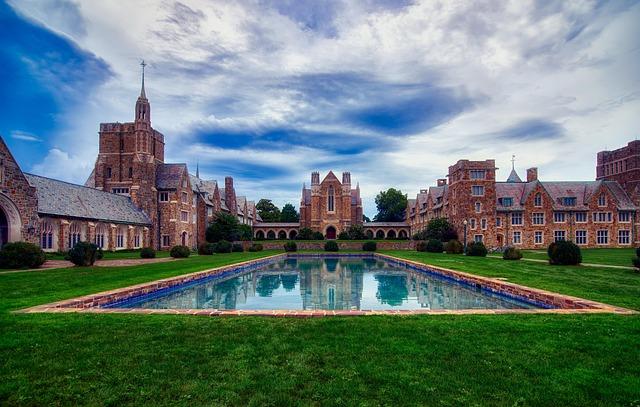
In the latest issue of Time Magazine, an incisive exploration reveals how college education has become a powerful fault line in contemporary America. Once heralded as a great equalizer, higher education now appears to deepen societal divisions, influencing economic opportunities, political affiliations, and cultural outlooks. This article delves into the complex dynamics driving this educational divide, examining its impact on the nation’s cohesion and what it means for America’s future.
The Rise of Educational Inequality and Its Political Impact
Over the past few decades, higher education has become a critical dividing line in American society, intensifying existing social and political rifts. While college graduates enjoy greater economic mobility, job security, and access to influential networks, those without a degree increasingly find themselves marginalized in an economy that disproportionately rewards academic credentials. This shift has not only deepened economic disparities but has also reshaped voting patterns and political affiliations, with education emerging as a key predictor of ideological alignment. The divide is stark: college-educated voters tend to lean towards progressive policies, while those without a degree often gravitate towards more conservative platforms.
Key contributors to this growing inequality include:
- Rising tuition costs that limit access for lower-income families
- The growing wage premium for college-educated workers
- Unequal distribution of educational resources across regions
- Political mobilization around education as a cultural marker
| Factor | Impact on Society | Political Consequence |
|---|---|---|
| Tuition Inflation | Restricts access to higher education | Increased demand for education reform |
| Job Market Segmentation | Widened income gap | Polarized voting blocs |
| Resource Disparity | Unequal academic preparation | Geographic political divides |
Cultural Divides Exacerbated by College Attendance Trends
Recent trends in college attendance have not only shaped individual career paths but also deepened the cultural chasm across various American communities. While higher education has traditionally been seen as a unifying force for upward mobility, the reality reveals a growing divide. Communities with higher rates of college graduates often experience shifts towards progressive social values and economic innovation, creating a stark contrast against areas where college attendance remains low. This divergence has intensified political polarization and fostered cultural enclaves that rarely intersect beyond their geographical borders.
Key factors contributing to this divide include:
- Economic Opportunity: Graduates tend to migrate towards urban centers, leaving rural regions with limited resources and fewer job prospects.
- Social Networks: Educational environments often reinforce distinct cultural norms, influencing worldview and civic engagement.
- Information Access: Differences in exposure to diverse ideas and media consumption create parallel realities about social and political issues.
| Region Type | College Attendance Rate | Dominant Cultural Traits |
|---|---|---|
| Urban | 65% | Progressive, Diverse, Tech-Oriented |
| Suburban | 55% | Moderate, Family-Centered, Professional |
| Rural | 30% | Traditional, Close-Knit, Manufacturing-Based |
Economic Consequences of a Fractured Higher Education System
The growing disparity in access to quality higher education has triggered a cascade of economic repercussions, reshaping America’s workforce and widening income inequality. As elite institutions continue to expand their influence, many community colleges and state universities struggle to keep pace, leaving vast swaths of the population with limited job opportunities and stagnant wages. This divide manifests starkly in employment statistics, where graduates from prestigious universities enjoy significantly higher starting salaries and lower unemployment rates compared to their counterparts from less-resourced institutions.
- Income Gap Intensifies: Graduates from top-tier colleges earn on average 40% more within the first decade after graduation.
- Regional Job Markets: Distressed rural areas with fewer degree-holding residents face declining economic growth and limited innovation.
- Skill Shortages: Industries requiring advanced qualifications report increasing difficulty in filling specialized roles, slowing productivity.
| Education Level | Average Starting Salary | Unemployment Rate |
|---|---|---|
| Elite Universities | $65,000 | 2.8% |
| State Universities | $48,000 | 5.2% |
| Community Colleges | $36,000 | 7.9% |
This fractured educational landscape not only threatens individual earning potential but also hampers the broader economic vitality across the nation. Businesses face uneven talent pools, compelling them to outsource jobs or automate roles to compensate for persistent skill shortages. Additionally, the social safety net is strained as fewer well-paying jobs translate into higher reliance on assistance programs, further deepening economic divides rooted in educational access. Without systemic reform, these trends could lock future generations into cycles of economic disadvantage.
Bridging the Gap Recommendations for Rebuilding National Unity Through Education
To mend the fractures widening across society, educational institutions must pivot from mere knowledge transmission to fostering inclusive dialogue and critical thinking. Emphasizing curricula that underscore shared values and the diverse histories of all Americans can create a foundational empathy, bridging cultural and political divides. Instead of reinforcing echo chambers, colleges should prioritize programs that encourage debate and the respectful exchange of differing viewpoints, making civil discourse a core academic pillar.
Practical steps include:
- Mandatory cross-cultural engagement initiatives – immersive experiences that increase understanding of various communities.
- Interdisciplinary courses combining history, civics, and media literacy to combat misinformation and foster nuance.
- Faculty diversity and training in inclusive pedagogies that challenge biases and model open-mindedness.
| Recommendation | Objective | Expected Impact |
|---|---|---|
| Cross-Cultural Engagement | Encourage empathy | Reduced prejudice |
| Interdisciplinary Courses | Enhance critical thinking | Informed citizenship |
| Faculty Diversity | Broaden perspectives | Balanced narratives |
In Retrospect
As the debate over the impact of college education on social and political divides continues, Time Magazine’s analysis underscores the complexity of the issue. While higher education opens doors for many, it also reflects and, at times, deepens existing fractures within American society. Understanding these dynamics is crucial for policymakers and educators aiming to bridge the gaps and foster a more unified future. The conversation around college’s role in shaping America’s identity is far from settled, making it an urgent topic for ongoing examination.