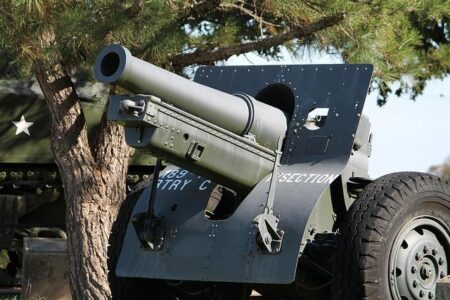
The United States has officially approved a $4 billion military loan to Poland, marking a significant step in strengthening the Eastern European nation’s defense capabilities. This substantial financial support, announced by the U.S. government, underscores the growing strategic partnership amid rising security concerns in the region. The loan aims to enhance Poland’s military readiness and interoperability with NATO forces, reflecting Washington’s commitment to bolstering allies in the face of evolving geopolitical challenges.
USA Approves Major Military Loan to Strengthen Poland’s Defense Capabilities
In a significant move aimed at bolstering Eastern European security, the United States has authorized a $4 billion military loan to Poland. This financial package is poised to enhance Poland’s defense infrastructure by enabling the acquisition of advanced weapon systems, improved surveillance technologies, and increased troop readiness. The deal reflects a growing strategic partnership amid rising regional tensions, highlighting Poland’s role as a critical ally in NATO’s eastern flank.
Key components of the military loan include:
- Procurement of cutting-edge missile defense systems
- Upgrades to cyber defense and intelligence capabilities
- Modernization of armored vehicles and aircraft fleets
- Enhanced joint training programs with U.S. forces
| Allocation | Estimated Cost (in $B) | Purpose |
|---|---|---|
| Missile Defense Systems | 1.5 | Protection against airborne threats |
| Cybersecurity Enhancements | 0.8 | Strengthening digital defense |
| Armored Vehicle Modernization | 1.0 | Upgrading ground combat capabilities |
| Training & Joint Exercises | 0.7 | Increasing interoperability with NATO forces |
Implications of the $4 Billion Loan on Regional Security and NATO Dynamics
The recent approval of a $4 billion military loan to Poland marks a strategic pivot, underscoring Washington’s commitment to fortifying Eastern European defenses amid growing tensions in the region. This substantial influx of funds is poised to enhance Poland’s military capabilities, including modernization of armored units and advanced missile defense systems, effectively serving as a deterrent against potential aggression. Regional security dynamics are set to shift, with Poland emerging as a more robust frontline state within NATO’s eastern flank. This development not only strengthens bilateral ties but also signals to adversaries the united front maintained by NATO members.*
Within the alliance, the loan is expected to stimulate deeper integration and operational coordination. Enhanced Polish capabilities will allow for more dynamic participation in joint exercises and mission readiness initiatives, benefiting collective defense. Key implications include:
- Augmented deterrence posture along NATO’s eastern borders
- Increased interoperability between U.S. and Polish forces
- Potential recalibration of NATO’s strategic deployment in Central Europe
| Aspect | Expected Impact |
|---|---|
| Military Modernization | Advanced defense systems and expanded capabilities |
| Regional Influence | Heightened leadership role within NATO Eastern Europe |
| Alliance Cohesion | Stronger joint operational frameworks |
Analysis of Poland’s Strategic Military Modernization Plans with US Support
The infusion of a $4 billion military loan by the United States marks a pivotal transformation for Poland’s defense capabilities, aligning with its broader strategic modernization goals. This financial backing accelerates Warsaw’s efforts to replace outdated Soviet-era equipment with cutting-edge, interoperable systems compatible with NATO standards. Central to these plans are upgrades focusing on missile defense, cyber warfare, and rapid deployment forces — key areas identified to bolster resilience against emerging threats in the region. Notably, the loan ensures access to advanced American platforms, including next-generation fighter jets and armored vehicles, emphasizing interoperability between Polish and U.S. forces amid escalating geopolitical tensions in Eastern Europe.
Poland’s strategic military overhaul, underpinned by this bilateral support, involves a multi-faceted approach:
- Modernization of Air Defense Systems: Integration of Patriot missile batteries and advanced radar technology.
- Expansion of Cyber and Electronic Warfare Capabilities: Implementation of state-of-the-art cyber defense infrastructure.
- Investment in Rapid Reaction Units: Enhanced mobility and firepower for frontline troops.
- Strengthening Naval Assets: Acquisition of littoral combat ships tailored for Baltic Sea security operations.
| Category | Priority | Expected Delivery |
|---|---|---|
| Fighter Jets | High | 2025 |
| Missile Defense Systems | High | 2024 |
| Cybersecurity Infrastructure | Medium | 2026 |
| Naval Combat Ships | Medium | 2027 |
Policy Recommendations for Enhancing US-Poland Defense Cooperation
To capitalize on the recently approved $4 billion military loan, policymakers should prioritize joint modernization initiatives that enhance interoperability between U.S. and Polish forces. Key areas for strategic focus include expanding missile defense capabilities, increasing joint training exercises, and accelerating technology transfers in cyber defense. Strengthening intelligence sharing mechanisms will also play a vital role in responding swiftly to emerging threats in the European theater.
Further investments in sustainable logistics and infrastructure are essential to support long-term deployment and rapid mobilization along NATO’s eastern flank. Collaborative R&D projects should target emerging domains such as autonomous systems and AI-enhanced battlefield awareness, reinforcing Poland as a pivotal regional security hub. Recommendations include:
- Establishing a permanent U.S.-Poland defense innovation fund
- Enhancing joint Army and Air Force command structures
- Expanding Poland’s access to advanced U.S. defense platforms
- Promoting bilateral defense industry partnerships
| Focus Area | Strategic Action | Expected Outcome |
|---|---|---|
| Missile Defense | Joint procurement of Patriot systems | Enhanced regional deterrence |
| Cybersecurity | Technology transfer & training programs | Improved digital resilience |
| Logistics | Infrastructure modernization | Rapid deployment capability |
| Innovation | Defense R&D collaboration | Next-gen warfare readiness |
The Conclusion
The approval of the $4 billion military loan marks a significant step in strengthening U.S.-Poland defense cooperation amid growing regional security challenges. This move underscores Washington’s commitment to supporting its Eastern European ally and enhancing NATO’s collective deterrence capabilities. As Poland prepares to modernize its armed forces with this aid, the broader implications for regional stability and geopolitical dynamics will continue to be closely monitored by international observers.