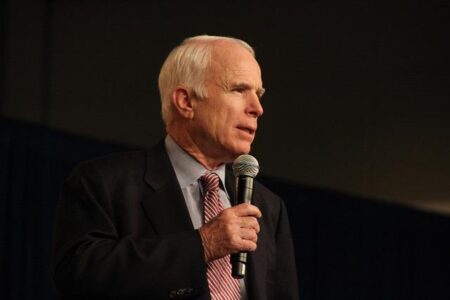

The United States has approved a $16.5 billion arms sale to Gulf states, intensifying concerns amid escalating tensions with Iran. The deal, announced by the Biden administration, aims to bolster the defense capabilities of key regional allies, including the United Arab Emirates and Saudi Arabia, as Tehran’s activities in the Middle East continue to raise alarms. The decision marks a significant move in Washington’s strategy to counter Iran’s influence, drawing scrutiny from international observers and prompting debates over the implications for regional stability.
US Greenlights Major Arms Sale to Gulf Allies in Strategic Move
The United States has finalized a significant arms deal valued at $16.5 billion with several Gulf nations, in a move widely interpreted as a strategic effort to strengthen regional defense amid escalating tensions with Iran. The package includes advanced missile systems, radar technology, and aerial combat capabilities, aimed at bolstering allies’ deterrence and surveillance potential in the Persian Gulf and beyond.
Key components of the deal encompass:
- Patriot missile batteries to enhance air defense systems
- F-35 fighter jets for superior aerial capabilities
- Advanced radar and surveillance tools for improved situational awareness
| Country | Equipment | Estimated Value (USD) |
|---|---|---|
| United Arab Emirates | F-35 Jets & Patriot Systems | $8.2 billion |
| Saudi Arabia | Missile Defense & Radar Tech | $5.7 billion |
| Bahrain | Naval Surveillance Equipment | $2.6 billion |
Officials emphasized that the transaction serves not only to equip Gulf allies but also to reaffirm the US commitment to maintaining stability in a geopolitically sensitive region. Critics, however, caution that this could further escalate an already complex security environment, with Iran warning of potential retaliatory measures.
Implications of the Arms Deal for Regional Security and Iran Relations
The approval of the $16.5 billion arms deal marks a significant escalation aimed at bolstering the defense posture of key Gulf states, particularly Saudi Arabia and the United Arab Emirates. These countries view enhanced military capabilities as essential countermeasures to Iran’s growing influence and assertiveness in the region. By supplying advanced weaponry, including missile defense systems and precision-guided munitions, the United States is signaling its commitment to maintaining a strategic balance and deterring any potential aggression from Tehran. However, this move also risks exacerbating regional arms races and complicating efforts toward diplomatic de-escalation.
Key implications include:
- Heightened security coordination: Gulf states are expected to deepen military cooperation, sharing intelligence and synchronizing defense protocols.
- Diplomatic strain: Iran may perceive the deal as provocative, potentially reducing incentives for engagement and increasing rhetoric against Western involvement.
- Regional stability challenges: Neighboring countries could respond by modernizing their own arsenals, contributing to volatility.
| Aspect | Potential Outcome |
|---|---|
| Military Balance | Shifts towards Gulf states’ advantage |
| Iran’s Response | Increased defensive posturing |
| Diplomatic Relations | Increased tensions, reduced dialogue |
| Regional Arms Race | Acceleration and expansion |
Expert Analysis on the Balance of Power in the Middle East
The recent US approval of a $16.5 billion arms package to Gulf states signals a strategic recalibration in Washington’s approach to the Middle East, aiming to counterbalance Iran’s growing regional influence. This move not only reaffirms longstanding alliances with countries such as Saudi Arabia, the United Arab Emirates, and Qatar but also reflects an intensified focus on defense readiness amid escalating tensions in the Strait of Hormuz and beyond. Analysts suggest that by bolstering Gulf militaries with advanced air defense systems, precision-guided munitions, and maritime capabilities, the US seeks to create a deterrent framework capable of limiting Tehran’s ability to project power and disrupt vital energy corridors.
However, experts caution that this arms infusion could exacerbate the fragile equilibrium, potentially spurring an arms race and further entrenching divisions between Gulf Cooperation Council (GCC) states and Iran. Key factors influencing this balance include:
- Technological superiority: Advanced weaponry may provide short-term tactical advantages but risk long-term strategic instability.
- Regional alliances: Shifting allegiances and diplomatic engagements continue to reshape power dynamics.
- Economic dependencies: Energy export routes and infrastructure remain vulnerable to conflict escalation.
| Country | Key Military Asset | Strategic Importance |
|---|---|---|
| Saudi Arabia | Patriot Missile Systems | Airspace defense against missile threats |
| UAE | F-35 Stealth Fighters | Enhanced air superiority and strike capabilities |
| Qatar | Naval Patrol Vessels | Securing maritime routes and deterrence at sea |
Policy Recommendations for Navigating US-Gulf-Iran Dynamics
To effectively manage the escalating tensions in the Gulf region, it is imperative for US policymakers to adopt a multi-faceted strategy that balances military readiness with robust diplomatic engagement. Prioritizing dialogue between Gulf states and Iran can reduce misunderstandings and de-escalate conflicts. Additionally, enhancing intelligence-sharing mechanisms among allied nations will provide better situational awareness and proactive conflict prevention. Implementing confidence-building measures, such as joint military exercises and humanitarian cooperation, could also foster trust and mitigate the risks of unintended confrontations.
Strategic investment in regional stability should go beyond arms deals by emphasizing economic development and political inclusivity within Gulf countries. The US must advocate for policies that address underlying socio-economic grievances that fuel instability, while supporting regional platforms aimed at conflict resolution. Below is a concise framework outlining key recommendations:
- Strengthen diplomatic channels: Facilitate direct talks between Gulf states and Iran to promote transparency.
- Enhance intelligence cooperation: Share real-time data to anticipate and prevent potential escalations.
- Promote joint security initiatives: Create trilateral security frameworks that include the US, Gulf states, and Iran.
- Focus on economic and social programs: Support initiatives that improve local livelihoods to reduce extremism.
- Engage regional organizations: Leverage bodies like the Gulf Cooperation Council for broader conflict management efforts.
Future Outlook
The approval of the $16.5 billion arms deal underscores the United States’ strategic commitment to its Gulf allies amid escalating tensions with Iran. As regional dynamics continue to shift, the move highlights Washington’s intent to bolster defense capabilities in a volatile environment. Observers will be closely watching how this significant military investment influences the balance of power and shapes future diplomatic engagements in the Gulf.