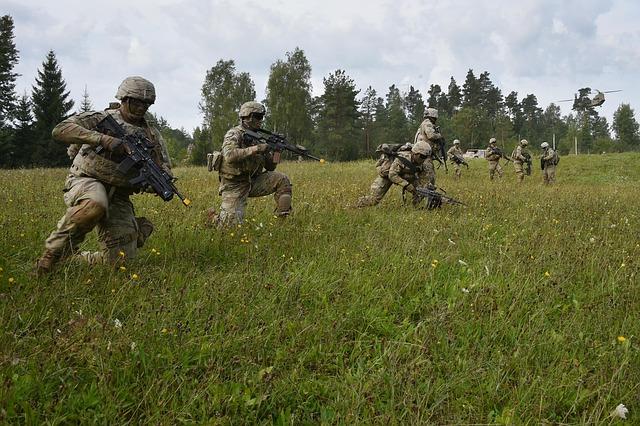
In a recent classified briefing, Senator Richard Blumenthal revealed that the United States appears to be “on a path” toward deploying ground troops in Iran, signaling a significant escalation in U.S. military involvement in the region. The disclosure, reported by PBS, raises critical questions about the evolving U.S. strategy amidst increasing tensions with Tehran. As discussions unfold behind closed doors, the potential deployment marks a pivotal development with far-reaching implications for U.S. foreign policy and regional stability.
U.S. Officials Signal Potential Ground Troop Deployment in Iran Following Classified Briefing
In a recent classified briefing, U.S. officials conveyed to lawmakers that the administration is seriously considering the deployment of ground troops to Iran. This development marks a significant shift in the U.S. approach, reflecting rising tensions and the potential escalation of military involvement in the region. Senator Richard Blumenthal, after the closed-door session, stated that the United States appears to be “on a path” towards sending boots on the ground, underscoring an evolving strategy that could reshape diplomatic and security dynamics in the Middle East.
Key factors fueling this decision include intelligence assessments, ongoing regional threats, and the desire to counter Iran’s influence more directly. Officials highlighted several considerations that may drive the deployment:
- Strategic military positioning: Establishing a U.S. presence to deter hostile actions.
- Intelligence operations: Enhancing surveillance and counterintelligence capabilities within Iran.
- Support for regional allies: Providing reassurance to partners concerned about Iran’s activities.
The conversations remain fluid, but the classified briefing signals a pivotal moment in U.S. foreign policy that could lead to an unprecedented ground engagement in Iran.
Senator Blumenthal Details Strategic Considerations and Risks of Military Escalation
Following a recent classified briefing, Senator Richard Blumenthal provided a candid assessment of the strategic calculus currently shaping U.S. military intentions toward Iran. He highlighted the escalating trajectory toward potential ground troop deployment as a response to heightened regional tensions but warned of the profound complexities involved. Key strategic concerns include the risk of unintended escalation, potential regional destabilization, and the challenges of securing coalition support in a volatile geopolitical landscape.
In his remarks, Senator Blumenthal emphasized the critical necessity of weighing these risks carefully against the intended objectives. He outlined several focal points driving the administration’s considerations:
- Maintaining regional alliances while navigating rival powers.
- Preventing further provocations by Iranian-backed militias.
- Avoiding prolonged conflict that could degrade U.S. military and economic resources.
| Factor | Potential Impact |
|---|---|
| Regional Stability | High Risk of Spillover Conflicts |
| Military Readiness | Strain on Forces and Logistics |
| Diplomatic Relations | Possible Fraying of Alliances |
Implications for U.S.-Iran Relations and Regional Stability Explored by Experts
Experts warn that the potential deployment of U.S. ground forces into Iran marks a significant turning point in bilateral relations, risking an escalation that could destabilize the entire Middle East region. Analysts emphasize that such a move would not only heighten tensions between Washington and Tehran but also embolden hardline factions within Iran, undermining diplomatic efforts and inflaming anti-American sentiment. The ripple effects could extend to key allies and strategic chokepoints, complicating efforts to maintain regional peace and security.
- Increased military presence: Could provoke retaliatory actions from Iran and its proxies.
- Diplomatic setbacks: Likely to derail ongoing negotiations on nuclear and security issues.
- Regional instability: May trigger broader conflict involving neighboring countries.
| Potential Impact | Short-Term Effect | Long-Term Risk |
|---|---|---|
| US-Iran Tensions | Heightened rhetoric and skirmishes | Protracted conflict and diplomatic isolation |
| Regional Allies | Increased military alertness | Shift in alliances and power balances |
| Global Energy Markets | Price volatility | Disrupted supply chains |
Security experts also underscore the importance of coordinated international response strategies, advocating for enhanced dialogue with regional powers to mitigate risks. They caution that an abrupt escalation without a clear exit strategy could entrench hostilities, making conflict resolution exponentially more difficult. The consensus among analysts suggests that any U.S. military action must be complemented by robust diplomatic channels to preserve the fragile equilibrium and prevent a broader crisis in the Middle East.
Calls for Congressional Oversight and Transparent Policy Discussion Intensify
Senator Richard Blumenthal raised urgent alarms following a recent classified briefing, signaling that the U.S. appears to be “on a path” toward deploying ground troops in Iran. This revelation has intensified demands among lawmakers and watchdogs for increased congressional oversight, highlighting concerns about the lack of transparent public dialogue surrounding U.S. military intentions in the Middle East.
Amid escalating tensions, key points emphasized by advocates for transparency include:
- Comprehensive disclosure: Full briefings to Congress beyond classified sessions to ensure bipartisan insight.
- Policy clarity: Clear articulation of objectives and strategic goals to the public.
- Legal scrutiny: Examination of the constitutional authority to deploy forces without explicit congressional authorization.
| Oversight Aspect | Current Status | Calls for Action |
|---|---|---|
| Congressional Briefings | Classified only | Expand to public sessions |
| Policy Transparency | Limited disclosures | Detailed public outlines |
| Deployment Authority | Unclear mandate | Explicit congressional approval |
Final Thoughts
As tensions continue to rise in the region, the potential deployment of U.S. ground forces in Iran marks a significant and controversial development in American foreign policy. Senator Blumenthal’s remarks following the classified briefing underscore the gravity of the situation and the administration’s evolving stance. The coming weeks will be critical in determining the next steps Washington takes amid growing concerns over security and diplomacy in the Middle East. PBS will continue to monitor the story closely and provide updates as more information becomes available.