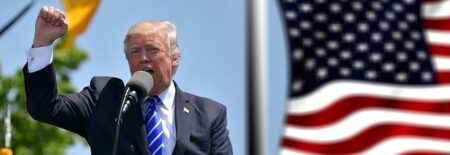
In a strategic turn that has significant implications for regional stability, former U.S. President Donald Trump has intensified pressure on Venezuela, reigniting tensions between the two nations. This persistent campaign reflects a complex interplay of political, economic, and ideological factors driving Trump’s aggressive stance. As the Maduro regime faces mounting international scrutiny, understanding the motivations behind Trump’s actions is crucial for grasping the evolving dynamics of U.S.-Venezuela relations. This article explores three major reasons underpinning Trump’s relentless pursuit of Caracas, shedding light on the broader geopolitical contest at play.
US Strategic Interests Drive Pressure on Maduro’s Regime
At the heart of the US approach to Venezuela lies a complex web of strategic calculations aimed at reinforcing American influence in Latin America and safeguarding key geopolitical interests. Caracas sits on one of the world’s largest oil reserves, making Venezuela a coveted asset in the global energy landscape. Amid rising competition from China and Russia, Washington views the Maduro government as a barrier to regional stability and energy market dominance. The Trump administration’s pressure campaign reflects a broader strategy to isolate Venezuela politically while curbing the growing presence of foreign actors that undermine US primacy.
The economic turmoil and political dysfunction in Venezuela have provided fertile ground for US leverage, but Washington’s ambitions extend beyond economic pressure. Key elements include:
- Energy security: Controlling Venezuela’s oil resources could weaken adversaries and secure alternative sources for American allies.
- Regional influence: Reinforcing democratic norms and countering authoritarian regimes aligns with broader US doctrine in the Western Hemisphere.
- Countering adversaries: Limiting Russia and China’s foothold in Venezuela is essential to maintaining strategic balance.
| Strategic Interest | US Objective | Expected Outcome |
|---|---|---|
| Energy Resources | Control oil supply chains | Energy dominance |
| Regional Stability | Support democratic allies | Reduced authoritarian influence |
| Geopolitical Rivalry | Limit Russia & China influence | Strategic advantage in Americas |
Humanitarian Concerns and the Venezuelan Crisis
The Venezuelan crisis has escalated into one of the most severe humanitarian emergencies in Latin America, with millions fleeing the country amid food shortages, collapsing healthcare, and political turmoil. President Trump’s administration has cited these conditions as a justification for intensifying pressure on Nicolás Maduro’s government. The U.S. argues that sanctions and diplomatic isolation are tools aimed at restoring democracy and alleviating the suffering of Venezuelan citizens. Yet, critics warn that such measures risk exacerbating the hardships faced by ordinary people, cutting off vital imports and plunging countless families further into poverty.
Amid stagnant oil production and hyperinflation, Venezuela’s health system teeters on collapse, leading to malnutrition, disease, and limited access to life-saving medicines. International organizations have repeatedly appealed for humanitarian corridors and aid deliveries, but political deadlock has severely restricted relief efforts. The Trump administration insists that any assistance must avoid bolstering Maduro, creating a complex situation where:
- Diplomatic pressure serves both as leverage and a potential barrier to swift humanitarian aid.
- Sanctions target government revenues but indirectly impact the civilian population’s access to essential goods.
- Humanitarian organizations face operational constraints amid the unstable political landscape.
| Key Humanitarian Indicators | Pre-Crisis (2015) | Current (2024) |
|---|---|---|
| Malnutrition Rate | 8% | 35% |
| Access to Medicine (%) | 95% | 25% |
| People Displaced (millions) | 0.5 | 7 |
Impact of Sanctions on Venezuela’s Economy and Society
The sweeping sanctions imposed on Venezuela have deepened the country’s economic crisis, exacerbating hyperinflation, food shortages, and a collapse in public services. Trade restrictions, particularly targeting the oil sector, have slashed government revenue, stripping Caracas of vital resources needed to sustain social programs and maintain infrastructure. Amid these economic hardships, everyday Venezuelans have faced increasing difficulties accessing medicine and basic necessities, leading to significant public health challenges and migration pressures.
Beyond economic disruption, the sanctions have intensified societal fractures by fueling political instability and social unrest. The pressure has widened the gulf between the government and opposition factions, while ordinary citizens bear the brunt of reduced access to employment and social welfare. Key impacts include:
- Rising unemployment: Many state-run enterprises have downsized or shuttered due to lost oil revenues.
- Healthcare shortages: Hospitals struggle without imported medical supplies.
- Mass migration: Over 5 million Venezuelans have fled in recent years.
- Humanitarian concerns: International agencies warn of worsening poverty and malnutrition.
| Key Indicator | Pre-Sanctions (2016) | Current Estimate (2023) |
|---|---|---|
| GDP Contraction | -18% | -60% |
| Inflation Rate | 254% | 1,000,000%+ |
| Unemployment | 8% | 35% |
| Population in Poverty | 48% | 80%+ |
Recommended Diplomatic Approaches to Resolve the Standoff
Engagement through multilateral diplomacy remains a cornerstone tactic advocated by seasoned international relations experts. Leveraging the influence of regional organizations such as the Organization of American States (OAS) and the United Nations provides a platform for neutral mediators to encourage dialogue between the US and Venezuela. This approach not only facilitates open communication channels but also helps to alleviate mutual suspicions, aiming to foster a climate conducive to tangible negotiation outcomes. Furthermore, involving third-party countries with historical ties or credibility on both sides can bridge gaps that direct US-Venezuela talks might struggle to overcome.
Complementing multilateral efforts, targeted confidence-building measures are essential for de-escalation. These include incremental policy adjustments such as easing certain sanctions in exchange for clear humanitarian progress or electoral transparency. Such steps could serve as trust tests, signaling commitment on both ends. Below is a breakdown of possible diplomatic instruments and their intended effects, which could collectively guide the path toward a peaceful resolution:
| Diplomatic Instrument | Purpose | Expected Outcome |
|---|---|---|
| Sanctions Relief | Encourage political concessions | Renewed dialogue and decreased tensions |
| Third-Party Mediation | Neutral conflict facilitation | Trust-building and concrete agreements |
| Humanitarian Aid Channels | Alleviate immediate crises | Improved civilian conditions, confidence boost |
| Electoral Monitoring | Ensure transparency and fairness | Enhanced legitimacy of political processes |
The Conclusion
In sum, the Trump administration’s intensified focus on Venezuela reflects a confluence of strategic, economic, and political objectives. By targeting the Maduro regime, the United States aims to curb authoritarian influence in the region, safeguard American energy interests, and signal a tough stance on governance challenges in Latin America. As the situation continues to evolve, the effectiveness and consequences of this pressure campaign will remain key points of scrutiny for policymakers and observers alike.