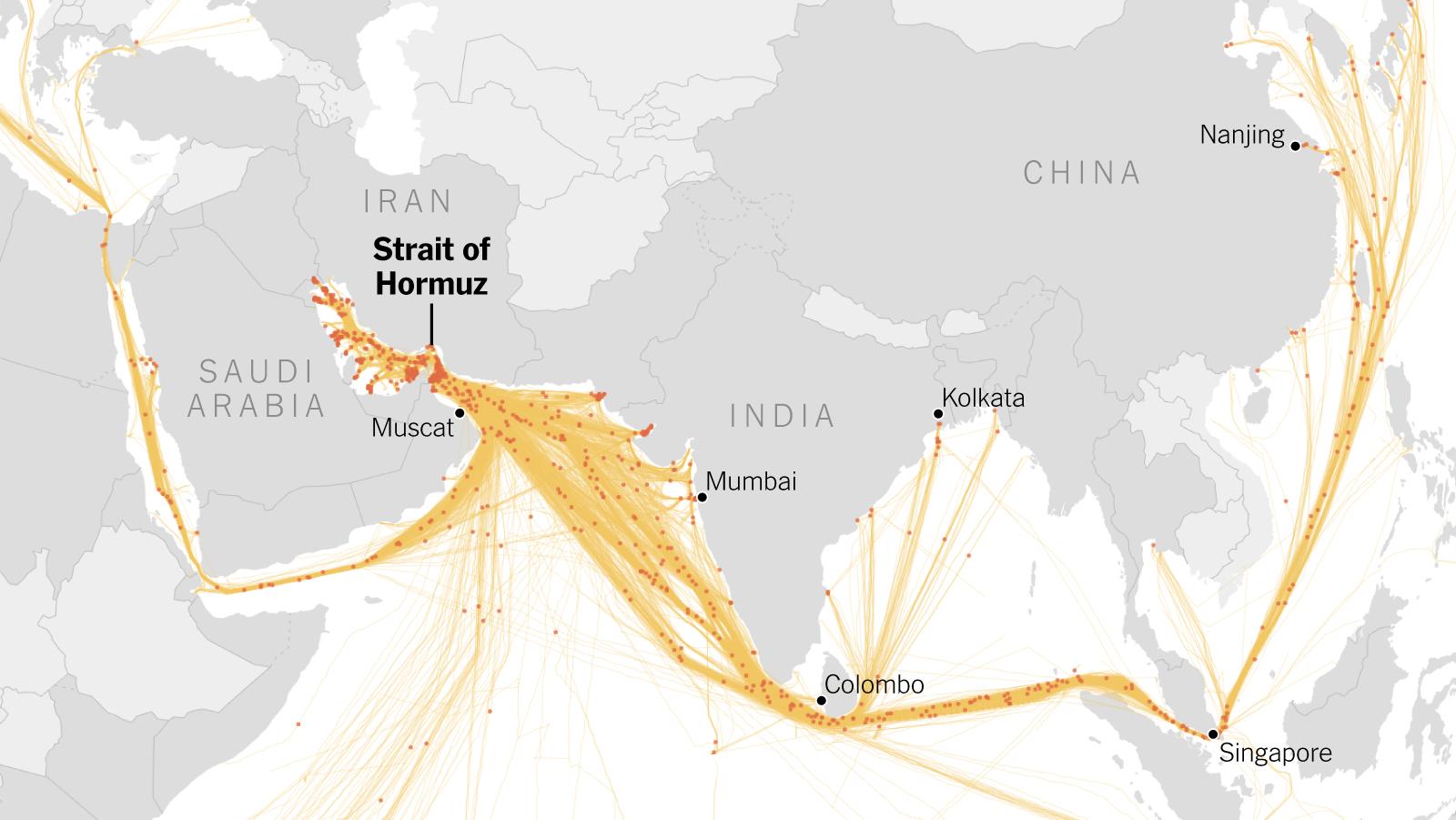
In a move that has sent shockwaves through the global energy market, Iran has officially approved the closure of the Strait of Hormuz, one of the world’s most critical maritime corridors for oil and gas transit. The decision, announced amid escalating regional tensions, poses significant risks to the steady flow of energy supplies and has elicited swift reactions from international powers. This development marks a pivotal moment with far-reaching implications for global trade and geopolitical stability.
Iran Moves to Close Strait of Hormuz Amid Rising Tensions
In a dramatic escalation of regional tensions, Tehran has announced plans to restrict passage through the Strait of Hormuz, a strategic chokepoint through which approximately 20% of the world’s oil trade transits daily. The move comes amid increasing hostilities and international sanctions, raising alarms across global markets and prompting urgent diplomatic discussions. Iran’s government cites security concerns and aggressive foreign policies as justification for this unprecedented decision, signaling a potential disruption in global energy supplies.
The economic and geopolitical implications are profound, with experts warning of:
- Spike in oil prices as supply chain uncertainties intensify
- Heightened military alertness from neighboring Gulf states and international naval forces
- Potential rerouting of maritime traffic through alternative, longer paths, increasing transit costs
| Key Facts | Details |
|---|---|
| Daily Oil Transit | ~21 million barrels |
| Countries Impacted | Over 30, including China, India, Japan |
| Length of Strait | Approx. 39 miles (63 km) |
| Previous Closures | 1979, 1980s Iran-Iraq war |
Strategic Importance of the Strait in Global Oil and Gas Supply
The Strait of Hormuz serves as a critical maritime chokepoint, through which nearly 20% of the world’s petroleum passes daily. This narrow waterway, connecting the Persian Gulf to the Gulf of Oman and the Arabian Sea, is pivotal for global oil and gas exports, particularly for major producers such as Iran, Saudi Arabia, Iraq, and the United Arab Emirates. Any disruption here would not only impact energy markets but could also trigger widespread fluctuations in global oil prices, affecting economies worldwide.
Beyond crude oil, the strait facilitates the transit of:
- Liquefied natural gas (LNG) shipments
- Petrochemical products
- Refined fuels
Given its strategic relevance, international stakeholders continuously monitor the Strait of Hormuz for geopolitical stability. The closure approved by Iran threatens to sever an essential artery of global energy supply chains, casting uncertainty over market stability and energy security across Asia, Europe, and beyond.
| Country | Daily Oil Export via Strait | % of Global Supply |
|---|---|---|
| Saudi Arabia | 7.5 million barrels | 8.0% |
| Iran | 2.0 million barrels | 2.1% |
| UAE | 3.0 million barrels | 3.2% |
| Iraq | 3.5 million barrels | 3.7% |
Potential Economic and Geopolitical Impacts of the Closure
The decision to close the Strait of Hormuz, a crucial maritime chokepoint through which nearly 20% of the world’s petroleum passes, is set to send shockwaves through global energy markets. Immediate economic consequences may include a spike in oil prices as supply routes become uncertain, pushing inflation rates higher worldwide. Energy-dependent economies, particularly in Asia and Europe, will likely face severe disruptions in oil and gas imports, potentially leading to rationing and increased production costs across industries. The ripple effect may also accelerate the search for alternative energy sources, reshaping long-term investment trends in the sector.
On the geopolitical front, the closure raises tensions across international alliances and regional powers. It may prompt coordinated military responses aimed at reopening this vital artery, increasing the risk of confrontation in the Persian Gulf. Simultaneously, countries reliant on Strait access are expected to forge new partnerships or strengthen existing ties to secure alternative shipping routes. These developments could trigger a realignment of strategic interests, with diplomatic negotiations, economic sanctions, and military posturing becoming more pronounced in the coming months.
| Impact Area | Likely Outcome | Key Stakeholders |
|---|---|---|
| Global Oil Prices | Surge with increased volatility | Oil-exporting and importing nations |
| Energy Security | Heightened concerns, diversification efforts | Importing countries (China, India, EU) |
| Military Posture | Potential escalation and deployments | US, Iran, Gulf States, NATO |
| Diplomatic Relations | Increased tensions and sanctions | International community, UN |
- Economic instability could reverberate beyond the Middle East, affecting global markets.
- Alliances and rivalries may shift, especially among Gulf Cooperation Council (GCC) countries.
- Energy diversification strategies might accelerate as nations seek security.
Recommendations for International Response and Energy Security Measures
In light of recent developments, the international community must prioritize coordinated diplomatic efforts to de-escalate tensions and ensure the unobstructed flow of maritime energy supplies. Key measures include:
- Engaging regional stakeholders for dialogue to prevent escalation
- Strengthening multinational naval patrols to guarantee safe passage through critical chokepoints
- Enhancing intelligence-sharing mechanisms to monitor threats and respond proactively
To mitigate the immediate risks posed by supply disruptions through the Strait of Hormuz, governments and energy firms should adopt diversified strategies to safeguard energy security. These steps encompass:
- Accelerating investments in alternative pipelines, LNG terminals, and renewable energy sources
- Strategic petroleum reserve optimization to buffer against short-term shocks
- Promoting energy efficiency across industries to reduce dependence on vulnerable routes
| Measure | Short-Term Impact | Long-Term Benefit |
|---|---|---|
| Multinational Naval Patrols | Immediate route security | Strengthened regional stability |
| LNG Infrastructure Expansion | Alternative supply | Diversified energy mix |
| Strategic Reserve Enhancement | Supply buffer | Resilience to crises |
Concluding Remarks
The approval by Iran to close the Strait of Hormuz marks a significant escalation in regional tensions with far-reaching implications for global energy markets. As one of the world’s most crucial maritime chokepoints, any disruption to the flow of oil and gas through the strait could trigger volatility in prices and heighten geopolitical uncertainty. The international community will be closely monitoring developments in the coming days, as diplomatic efforts intensify to prevent further destabilization of this critical artery in global trade.