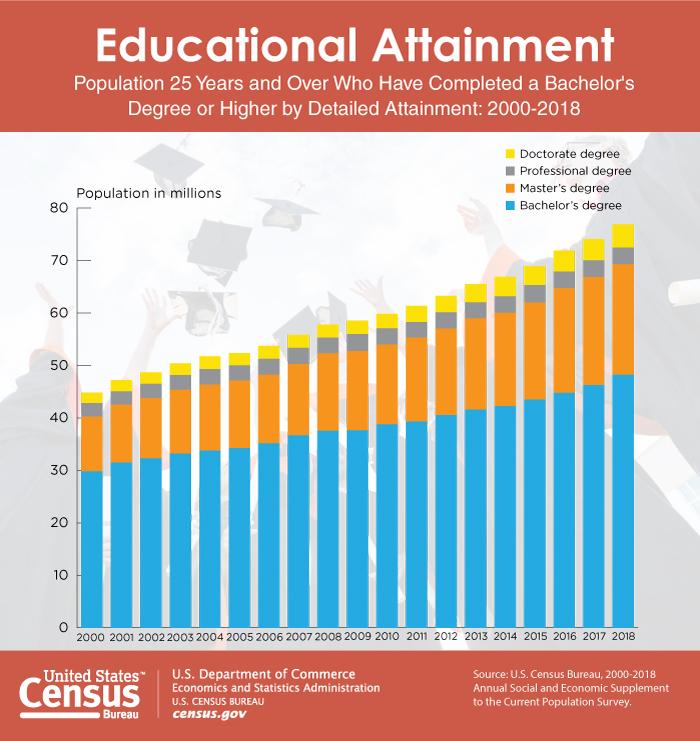
Educational attainment in the United States has undergone significant transformation over the past six decades, reflecting broader social, economic, and demographic shifts. From 1960 to 2022, key trends in high school graduation rates, college enrollment, and advanced degree completions reveal the evolving landscape of American education. Drawing on comprehensive data from Statista, this article delves into how these changes have shaped workforce readiness, income potential, and social mobility, highlighting both progress and persistent challenges in achieving equitable educational outcomes nationwide.
Trends in Educational Attainment Across Decades
Over the past six decades, the evolution of educational attainment in the United States has shown distinct and dynamic shifts. The percentage of adults with at least a high school diploma has steadily increased, reflecting nationwide efforts to prioritize secondary education. Meanwhile, the proportion of individuals holding bachelor’s degrees or higher has more than tripled since the 1960s, signaling an expanding demand for higher education driven by a rapidly evolving job market and technological advancements.
Key Observations:
- The 1960s marked a period where less than half of the adult population completed high school.
- By the 1990s, bachelor’s degrees became increasingly common, aligning with economic shifts toward knowledge-based industries.
- The 21st century continues to see steady growth in postgraduate education, influenced by globalization and innovation sectors.
| Decade | High School Graduates (%) | Bachelor’s Degree or Higher (%) | Postgraduate Degree (%) |
|---|---|---|---|
| 1960s | 45 | 10 | 3 |
| 1980s | 75 | 20 | 5 |
| 2000s | 85 | 30 | 10 |
| 2020s | 90 | 40 | 15 |
Disparities and Demographic Shifts in Graduation Rates
Over the decades, graduation rates in the U.S. have reflected significant disparities linked to race, ethnicity, and socioeconomic status. While overall attainment has improved, certain groups have made larger gains than others, revealing a complex portrait of progress and persistent inequality. For example, the high school graduation rates for Hispanic and Black students increased notably after 1980, yet these groups still lag behind their White and Asian counterparts. Economic barriers and access to quality education continue to play critical roles in shaping these outcomes, emphasizing the need for targeted educational policies.
Key demographic shifts shaping these trends include:
- Rising graduation rates in minority populations coinciding with immigration and civil rights advancements.
- An expanding gender gap, with female students consistently graduating at higher rates than males.
- Urban versus rural disparities, where resource allocation impacts student retention and completion.
| Year | White Students (%) | Black Students (%) | Hispanic Students (%) | Asian Students (%) |
|---|---|---|---|---|
| 1980 | 75 | 52 | 48 | 80 |
| 2000 | 85 | 65 | 62 | 89 |
| 2022 | 90 | 75 | 74 | 92 |
Impact of Higher Education on Workforce Development
Over the past six decades, advances in educational attainment have played a pivotal role in shaping the U.S. workforce landscape. As more individuals completed higher education, industries experienced a surge in skilled labor ready to meet the demands of an increasingly complex economy. This has not only fueled innovation across sectors like technology and healthcare but has also contributed to rising productivity and economic growth nationwide.
Key benefits emerging from higher education include:
- Enhanced problem-solving and critical thinking skills among employees
- Greater adaptability to technological advances and market shifts
- Higher average earnings and reduced unemployment rates
- Development of leadership and specialized expertise
| Educational Level | Workforce Impact | Average Earnings (2022) |
|---|---|---|
| High School Diploma | Basic entry-level roles | $38,000 |
| Associate Degree | Skilled technical positions | $46,500 |
| Bachelor’s Degree | Professional and managerial roles | $67,000 |
| Graduate Degree | Executive and specialized careers | $89,000 |
Policy Recommendations to Bridge the Education Gap
To effectively narrow the educational divide in the United States, targeted reforms must prioritize equitable funding models that support under-resourced schools. Evidence indicates that investments should focus not just on infrastructure but also on enhancing teacher quality through competitive salaries and ongoing professional development. Additionally, incorporating culturally responsive curricula and expanding access to early childhood education are essential steps in leveling the playing field for all students.
Policy makers are urged to implement comprehensive strategies including:
- Broadening access to affordable higher education by increasing grants and reducing student loan dependency.
- Strengthening community partnerships that provide mentorship and career readiness programs for disadvantaged youth.
- Expanding technology access to close the digital divide, especially in rural and low-income urban areas.
- Implementing robust data tracking systems to monitor student progress and identify gaps early.
| Policy Focus | Expected Impact |
|---|---|
| Increased Funding Equity | Improved resource distribution and student outcomes |
| Early Childhood Access | Higher readiness and long-term academic success |
| Digital Inclusion Programs | Expanded learning opportunities and reduced dropout rates |
Wrapping Up
In summary, the evolution of educational attainment in the United States from 1960 to 2022 reflects significant progress and ongoing challenges. The steady rise in high school and college graduation rates underscores advancements in access and opportunity, while persistent disparities highlight areas requiring continued policy focus. As the nation moves forward, data from sources like Statista will remain crucial in tracking trends and informing efforts to ensure education serves as a true driver of equity and economic mobility for all Americans.